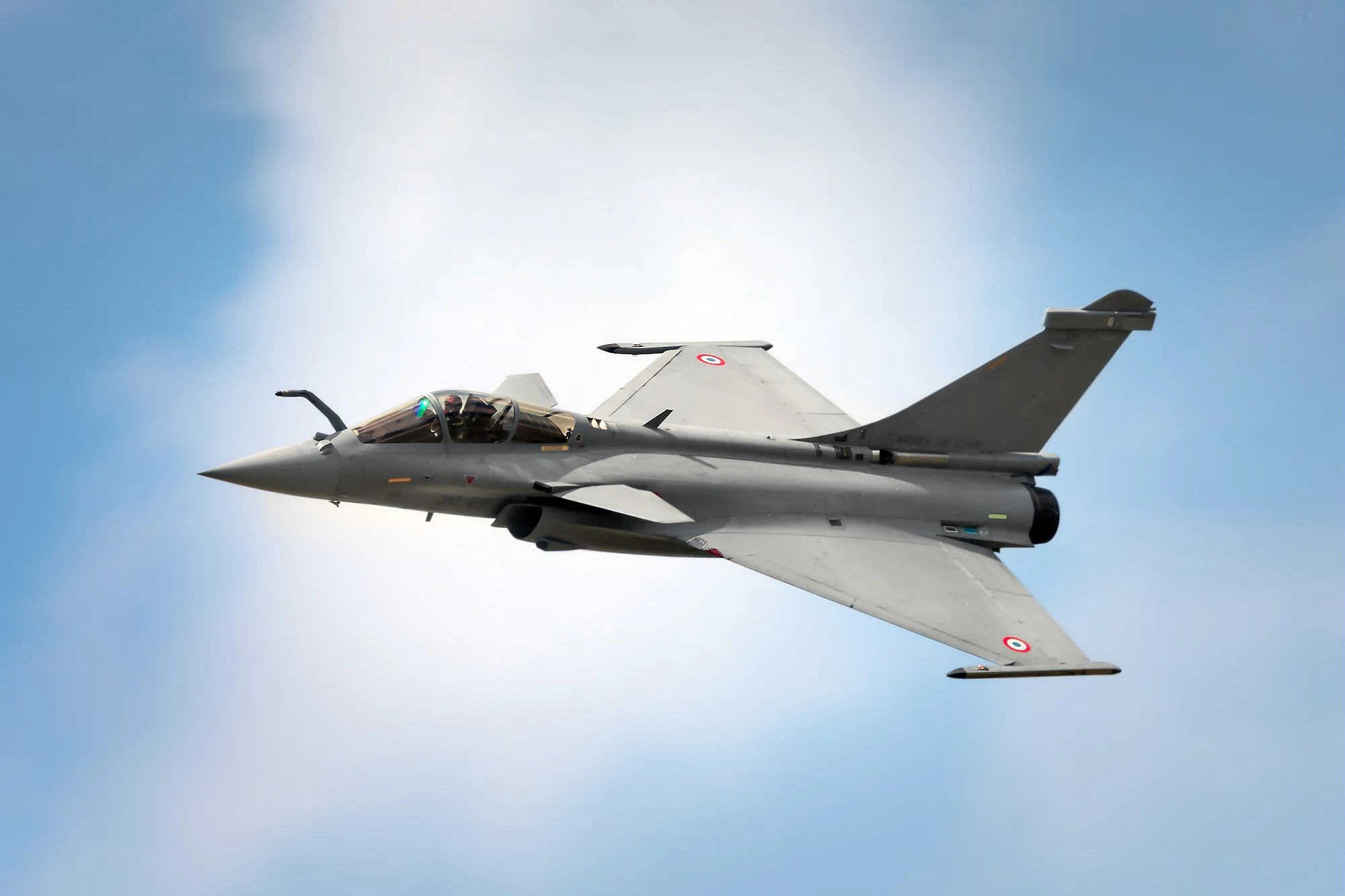
The Dassault Rafale program is entering a period of sustained high-rate production, with export customers increasingly interested in acquiring the aircraft despite strong competition provided by the Lockheed Martin F-35, Saab Gripen, and Eurofighter Typhoon. The French fighter is thriving at the moment. Dassault closed out 2025 with a firm order backlog for 220 aircraft, including 45 for France and 175 for export customers. Deliveries of the Rafale are about to accelerate, driven by a mix of repeat customers and new wins in the export market.
Production Forecast. We expect Dassault to successfully ramp up production from 26 units in 2026 to a peak of 35 aircraft annually between 2029 and 2030. This ramp-up is critical to satisfying the massive backlog, which includes a blockbuster 80-aircraft order from the United Arab Emirates and the ongoing deliveries of 42 aircraft ordered by Indonesia (which received its first batch of three aircraft in January 2026).
The export market continues to be the primary engine of growth for the Rafale program. In the last 18 months alone, the Rafale secured a new order from Serbia, which shifted away from traditional Russian suppliers to sign a $2.99 billion deal for 12 new aircraft in August 2024. Meanwhile, the Indian Navy’s decision to finalize a contract for 26 Rafale M fighters in April 2025 has cemented the type’s dominance in the Indian subcontinent, complementing the Indian Air Force’s existing fleet. While reports of a potential 114-aircraft Multi-Role Fighter Aircraft (“MRFA”) order from India remain speculative, the naval contract ensures the Rafale remains central to New Delhi’s carrier operations.
In November 2025, Ukrainian President Volodymyr Zelenskyy and French President Emmanuel Macron signed a letter of intent for Ukraine to acquire up to 100 Dassault Rafale fighter jets. This agreement is not a binding contract but a political commitment laying the groundwork for future sales and cooperation, with deliveries expected to be phased over several years. While Kyiv has called the deal “historic” and part of a broader effort to modernize its air force, significant questions remain about financing and feasibility. Ukraine’s defense budget and external funding mechanisms would need to cover the high cost of such a fleet, and it is currently unclear if funds are available to cover the cost of operating such a high-end fighter.
Domestic Stability: Tranche 5 and Beyond. While exports grab headlines, the French Ministry of Defense remains the program’s bedrock. The “Tranche 5” order, finalized in late 2023, added 42 aircraft to the backlog, ensuring production continuity. Looking ahead, budget proposals for 2026 indicate that France could add over 50 more aircraft starting in 2027. This new domestic commitment could bridge the gap until the Future Combat Air System (FCAS) comes online, keeping the Rafale production line active well into the 2030s.
Technological Evolution: The F4 Standard. Operational relevance is being maintained through aggressive upgrade cycles. The current F4.1 standard, qualified in 2023, has brought the Rafale into the era of collaborative combat. Key enhancements include the Thales CONTACT software-defined radio, the TALIOS long-range targeting pod, and the integration of the helmet-mounted Scorpion display. These upgrades focus heavily on connectivity and data exchange, allowing the Rafale to serve as a node in a networked battlespace rather than just a standalone shooter.
The F5 Upgrade: A “Super Rafale” The F5 standard, currently in development, is slated for service in the early 2030s. Driven by France’s need to maintain nuclear deterrence through the 2050s, the F5 represents a leap in capability. It will feature a new fiber-optic “nervous system” to handle the immense data bandwidth required by the new RBE2-XG radar, which uses Gallium Nitride (GaN) technology to detect stealth fighters like the Chengdu J-20 and Sukhoi Su-57.
Crucially, the F5 standard will introduce the ability to control Collaborative Combat Aircraft (CCA) – a new family of loyal wingman drones derived from the nEUROn demonstrator. These drones will handle high-risk Suppression of Enemy Air Defenses (SEAD) missions, extending the Rafale’s sensor reach while keeping the manned platform out of the deadliest engagement zones. To power these systems, the Safran M88 engines will be upgraded to provide 20% more thrust without increasing the footprint of the engine, avoiding the need for major modifications to the Rafale’s engine bay.
Outlook With a production horizon extending to 2035 and a clear technological roadmap to the F5 standard, Dassault has successfully positioned the Rafale to appeal to nations seeking a high-end fighter without all the strings attached to competing aircraft, particularly the U.S.-made Lockheed Martin F-35A and Boeing F-15EX. Delays to the FCAS program could lead to new orders for the Rafale over time, potentially extending production deep into the 2030s.

A lifelong aviation enthusiast, Douglas Royce currently co-edits Forecast International's Military Aircraft Forecast and Aviation Gas Turbine Forecast. As such, he plays a key role in many important projects that involve market sizing and forecasting for various segments of the world aerospace industry, as well as demand for related systems.