The ongoing Russo-Ukrainian war and the conflict in Iran have highlighted a factor in modern warfare that has become commonplace: drones are here to stay. From Ukraine’s rapid integration of commercial drones into its armed forces and its domestic production of such systems to Iran’s vast supply of cheap one-way attack drones, modern military forces have adapted to advances in unmanned aerial systems (UAS) technology to produce cost-effective and relatively simple combat and reconnaissance solutions.
An aspect of UAS use that has largely been overlooked is the adoption by Mexican drug cartels for their ongoing attacks on rival gangs and the Mexican government and military forces. The Cartel Jalisco Nueva Generacion (CJNG) has been seen as a pioneer in the use of drones as weapons systems and tools for reconnaissance in Mexico. Over the past five years, there has been a noticeable increase in the number of attacks on sicarios (cartel gunmen), military personnel, government officials, and civilians via the use of commercial drones.
Similar to the fight in Ukraine, what began as sicarios mounting hand grenades or primitive handmade explosives onto commercial quadcopter drones and dropping their payloads onto their targets has rapidly evolved into First-Person View (FPV) drones with 3D-printed munitions and sophisticated Counter-Unmanned Aerial Systems (C-UAS) for defense. Indeed, cartel members are believed to have joined Ukraine’s International Legion to gain valuable drone tactics training under what is arguably one of the most combat-experienced forces in the world. This sets a dangerous precedent as these sicarios can now effectively act as instructors with real-world drone combat experience.
Mexican drug cartels’ military roots run deep
In reality, Mexican drug cartels have long had a direct pipeline from the country’s armed forces. One of the most brutal groups, Los Zetas, was founded by elite commandos from the Mexican Army’s Grupo Aeromóvil de Fuerzas Especiales, colloquially known as The Bats, who deserted to become the Gulf Cartel’s enforcement arm before breaking away on their own. These are commandos, trained by U.S., French, and Israeli Special Forces, who are now leading this breakthrough into contemporary drone tactics that will certainly lead to more headaches for the Mexican and U.S. governments.
Multiple uses for commercial drones
The commercial drone market has developed into something akin to any other electronics supply chain. Quadcopters, FPV drones, and other types of drones have become commonplace on store shelves and even more readily available on web-based markets such as Amazon and Alibaba. The ubiquitous nature of these drones creates an inherent challenge to tracking potential illegal use of such products. The same purchase of an FPV drone could be used to practice a hobby or to attack a rival cartel’s stronghold.
Not only can drones be used for outright violent means, but gangs have also begun to use such technology in other illicit affairs, such as smuggling drugs and surveilling government installations and political officials. As of 2020, government officials acknowledged that cartels have carried out attacks and surveillance of political officials in Mexican states such as Jalisco, Guanajuato, Michoacan, and Baja California.
In February, Mexican Special Forces killed Nemesio Rubén Oseguera Cervantes, alias ‘El Mencho’, the leader of the notorious and powerful CJNG, in the central Mexican state of Jalisco, a CJNG stronghold. What followed were days of unmitigated violence by CJNG sicarios against military service members, law enforcement, government officials, and civilians across the country. Videos of firefights involving cartel ‘narco tanks’, heavy-duty trucks modified with armor plating and heavy weaponry, automatic firearms, military aircraft, and innocent civilian casualties made the rounds online. This was something seen numerous times before in Mexico’s troubled history battling cartel violence, but certain pieces of media began to stand out – videos of drone attacks. The scenes often taken from the frontlines in Ukraine or the Middle East had now surfaced in the Mexican cities and the countryside of Jalisco and Michoacan.
Countering illegal drone use
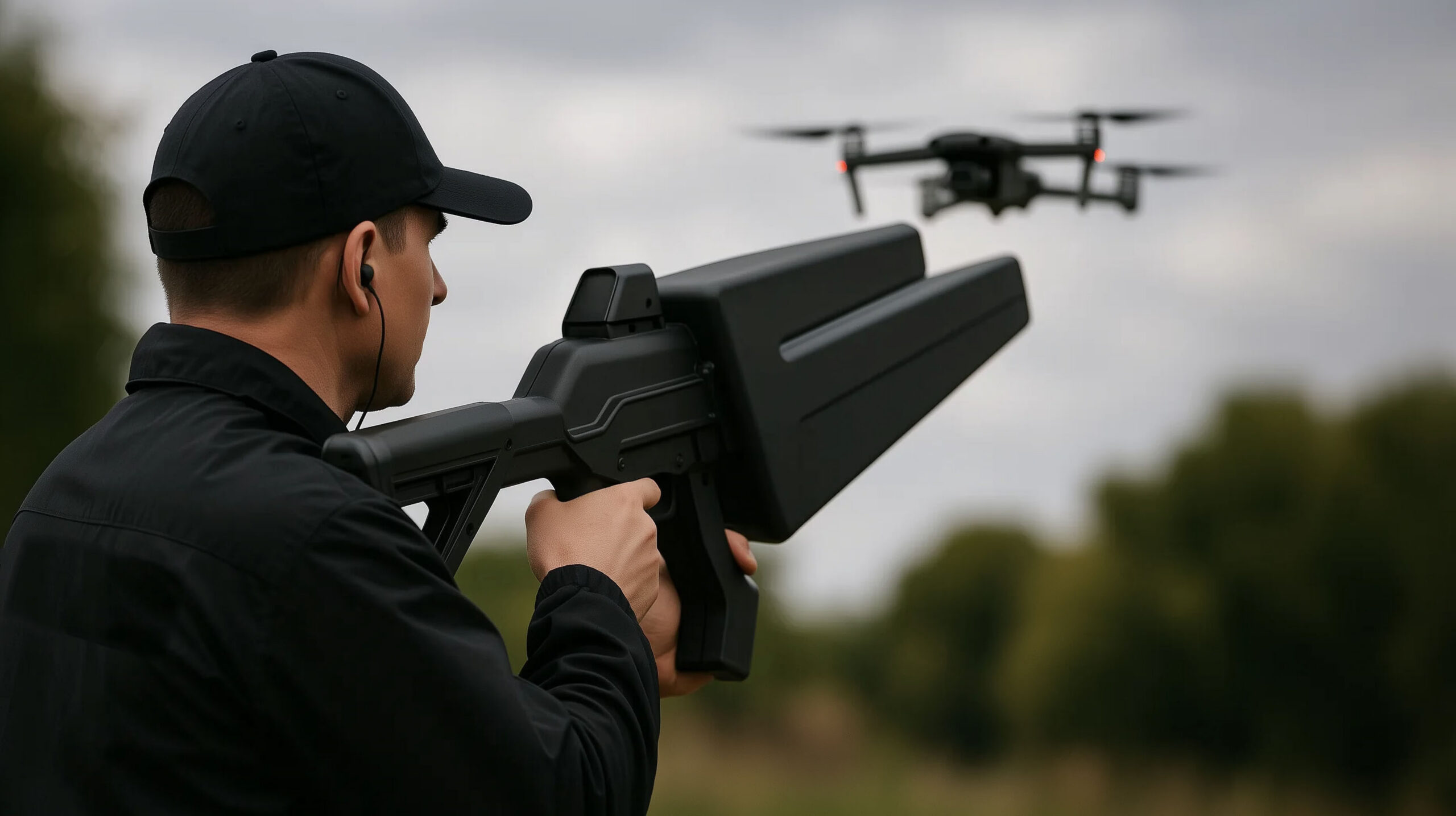
The ongoing threat of cross-border violence and intrusions has led to an uptick in C-UAS spending on the southern U.S. border. In order to help mitigate this vulnerability, the Department of Defense has rapidly delivered C-UAS technology totaling $20 million so far in 2026, with a desire to continue the investment, yet this has already caused confusion and frustration amongst government officials. On February 10, 2026, the airspace over El Paso International Airport was closed indefinitely due to what initial reports named as a test by the Defense Department of a C-UAS laser system. What followed was a confusion-filled interaction between the Federal Aviation Administration and the Department of Defense that resulted in the Army admitting to shooting at a mylar balloon it believed was a drone intruding from Mexico.
As the world’s most anticipated sporting event, the FIFA World Cup, comes to North America in the summer of 2026, the concern of continued cartel violence, especially via drone use, has heightened the security infrastructure in the host nations of the U.S., Mexico, and Canada. Mexico’s Ministry of National Defense has stated that it will deploy troops from its First Emergency Response Battalion, who are trained in C-UAS tactics, to protect stadiums and fan zones in Mexico City, Guadalajara, and Monterrey during the World Cup. The U.S., in its own attempt to bolster security at its numerous stadium sites, has allocated over $24 million in funding to the U.S. Secret Service for planning, risk analysis, intelligence sharing, and C-UAS protocols. The U.S. government has already awarded contracts to immediately procure Cyber-over-RF (CoRF) systems, produced by counter-drone company Sentrycs, and Fortem Technologies’ drone catching system. These systems will be deployed throughout the U.S. host cities spanning 11 states throughout the country.
Conclusion
The rapid evolution in contemporary warfare tactics has given rise to new technologies that have allowed military forces to pioneer new battlefield doctrines. Modern drone technology and largely affordable supply chains have allowed even the smallest actors to adopt this incredibly effective strategy. Cartels have clearly shown that it values its profits over all else and will go to any means necessary to cement their business interests. Drones have proven to be an invaluable, cheap, and easy-to-use tool for criminal organizations for reconnaissance and violent attacks, while law enforcement and military forces continue to invest heavily in expensive defense systems. Ultimately, as cartels continue to advance their use of drones, governments must procure new technology to counteract this threat.

Juan Lopez pursued an undergraduate degree in Political Science with an emphasis in International Relations and a minor in Russian studies from the University of California, Riverside. Juan’s diverse background includes his work as a staffer in the U.S. House of Representatives and in federal law enforcement which gave him extensive experience and knowledge in federal government operations, international affairs, counter terrorism, and national security. His interests include land-based weapon systems, small arms, military fixed wing aircraft, and Latin American relations. He is proficient in the Spanish language at a native level.