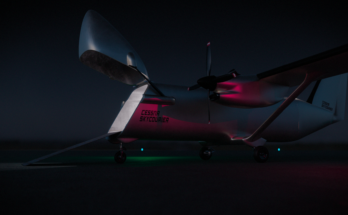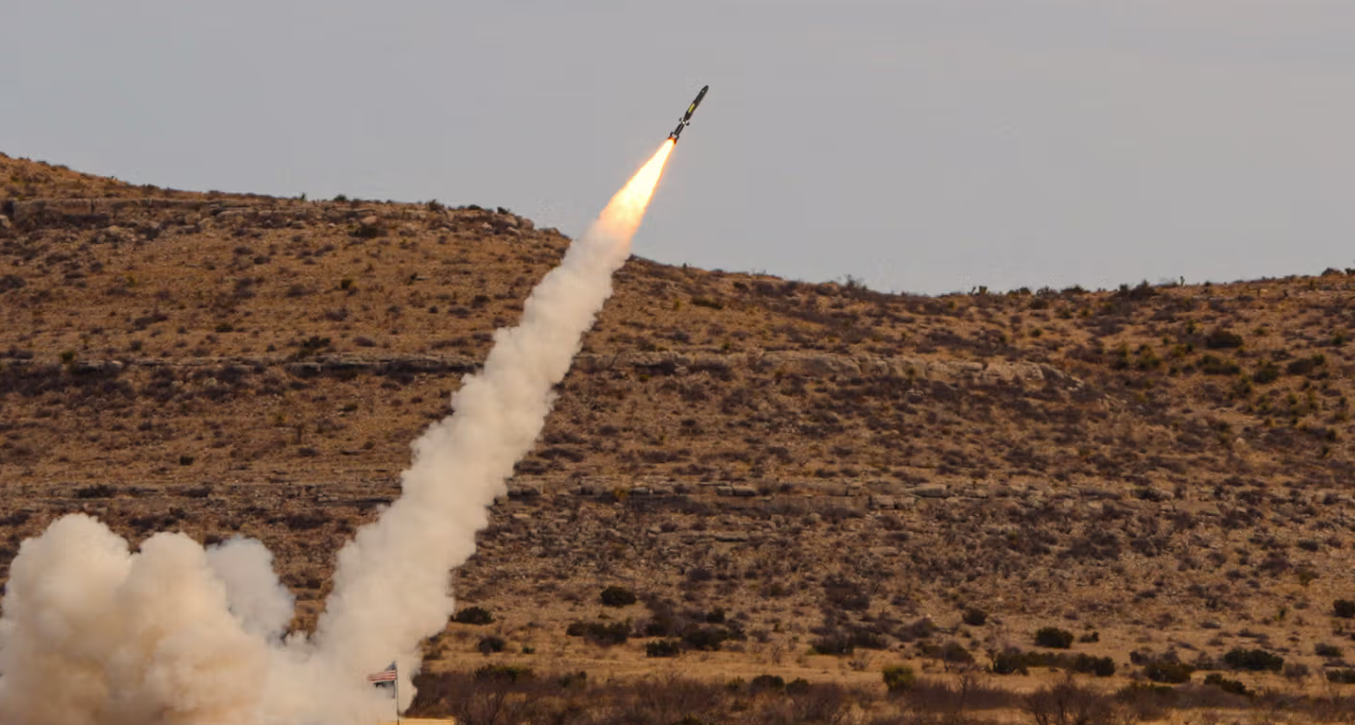
Ground demonstration of the Barracuda 500M air-breathing autonomous cruise missile. Source: Anduril
Anduril has expanded its role within the U.S. missile production ecosystem, emerging as the country’s third solid rocket motor (SRM) manufacturer while advancing a new cruise missile for rapid production, the Surface-Launched Barracuda-500M (SLB-500M). The missile is designed around a shortened production cycle, achievable in as little as 30 hours.
Technical Details
While many specifications remain undisclosed, the SLB-500M is reported to carry a 100 lb (45 kg) payload and achieve a range exceeding 500 nautical miles (575 miles, 926 kilometers), capable of engaging both land and maritime targets.
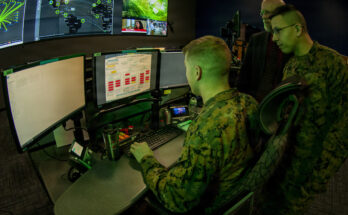
Anduril integrated the missile with its Lattice for Mission Autonomy software, which allows operators to designate targets while enabling coordinated behavior across teams of unmanned systems. The system also utilizes a containerized launcher capable of holding up to 16 all-up rounds, increasing deployment flexibility and allowing for rapid, high-volume launch capability from a single platform.
Production Model
The SLB-500M is built around a “production-first” philosophy, reportedly costing around $200,000. Approximately 70% of its components are commercially available parts, combined with an open-architecture design to reduce supply chain constraints.
This approach enables assembly in roughly 30 hours using what Anduril defines as “common hand tools,” representing a significant departure from traditional missile manufacturing timelines that can stretch into months or years.
Systemic Impacts and Strategic Uncertainties
The SLB-500M demonstrates an alternative approach to U.S. munitions production, driven by the urgency of replenishing stockpiles amid sustained global demand. Rather than prioritizing complex, long-production systems, this model emphasizes scalability and cost efficiency. With its low production cost, the SLB-500M offers a viable pathway for rapidly rebuilding inventories.
By leveraging simplified designs, commercial components, and rapid assembly processes, Anduril challenges the traditional defense industrial model. The ability to produce missiles in hours rather than months could reshape how the U.S. sustains its inventory during prolonged conflict.
However, these advantages introduce important uncertainties. While production speed and cost benefits are clear, they may come with trade-offs in resilience and reliability. Supply chain dependencies, particularly those tied to globally sourced commercial components, could create vulnerabilities at scale. Additionally, the operational effectiveness of rapidly manufactured systems remains largely unproven.
In contested environments, especially those involving advanced air defenses or electronic warfare, it is unclear whether lower-cost, quickly assembled missiles can match the survivability and precision of more complex legacy systems. One potential mitigating factor is mass deployment. When deployed in swarms, the Barracuda-500M’s high volume may offset individual performance limitations. In this context, mass and speed may compensate for reduced sophistication, aligning with the system’s core design philosophy.
The production model itself carries additional strategic implications. By emphasizing simplified production methods, barriers to entry are significantly reduced, not only for Anduril but for other emerging manufacturers. This may introduce a more distributed and competitive defense industrial base, where non-traditional contractors can produce viable munitions at scale. If sustained, this trend could reduce reliance on a small number of major defense primes while accelerating innovation cycles across the sector.
Finally, Anduril’s expansion into SRM production addresses one of the most persistent bottlenecks in U.S. missile manufacturing. As the third SRM producer in the United States, the company contributes to diversifying and strengthening a critical segment of the supply chain. This development carries long-term strategic significance, not only for Barracuda-500M production but for broader efforts to reduce backlogs and expand overall missile manufacturing capacity.

Lauren Estrada has a background in global and cyber intelligence, with a strong interest in communicating technical threats to non-technical audiences. She currently works as an Editor & Analyst with Forecast International and Military Periscope, where she contributes to research and analysis on defense technologies. Her previous experience includes defense technology research, regional risk assessments, client-facing intelligence reports, trend analysis, threat of actor behavior, and cyber-focused research.
While pursuing her B.S. in Global Security and Intelligence Studies at Embry-Riddle Aeronautical University Prescott, Lauren co-led a cross-disciplinary initiative to introduce cybersecurity fundamentals to students across all majors. Her team designed and proposed a course that bridged cybersecurity and non-technical disciplines, fostering inclusive engagement with cyber skills. This work led to speaking engagements at university industry board meetings and the 2025 National Conference on Undergraduate Research in Pittsburgh, PA.