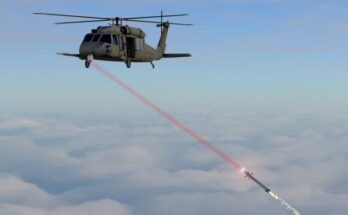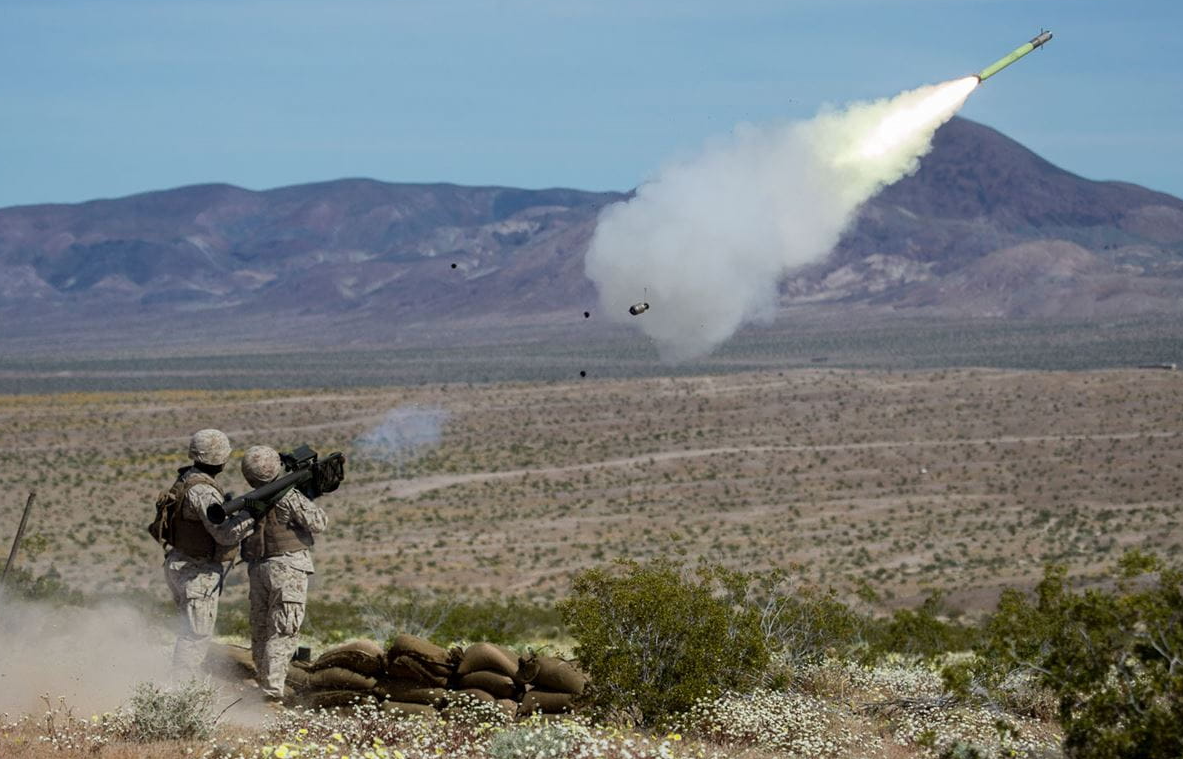
The FIM-92 Stinger has re-emerged in defense headlines, driven by heightened demand for short-range air defense and global supply backlogs. As the legacy platform faces these capacity constraints, the U.S. Army is aggressively pushing forward with its successor, the Next-Generation Short-Range Interceptor (NGSRI).
The NGSRI is designed with similar capabilities to the Stinger, only with improved features. Following successful flight demonstrations in mid-2026, the system remains on track for initial production by 2028. Its extended range and faster lock times have led to the assumption that the Stinger’s retirement is imminent.
However, this one-for-one replacement narrative is a flawed assumption that ignores global export realities. While the U.S. military intends to transition its domestic inventory to the NGSRI, domestic modernization does not dictate global retirement. The Stinger is currently operated by more than 20 nations, and international demand remains steady rather than shrinking.
Because the NGSRI is a new domestically-designed model, it has a lengthy timeline before it is cleared for Foreign Military Sales (FMS). For the vast majority of global allies, the Stinger is not a legacy system losing confidence; it remains a driver of procurement orders.
Sustained foreign demand will keep the Stinger line active in production and modification phases well past the NGSRI’s operational status, with Raytheon leaning on foreign co-production assistance. Whether a new variant ever materializes depends on how far these co-production partnerships expand.
Why Modernization Beats Replacement
The Stinger family has gone through several variants, but the FIM-92J and FIM-92K are what remain in wide active service. The J-model added a proximity fuze, letting it detonate near a target rather than requiring a direct hit, a better method against small Group 1 unmanned aerial vehicles (UAVs), but its infrared seeker still struggles with low-heat signatures. The K-model shares similar weaknesses, but adds the ability to mount onto vehicles, and it still targets primarily Group 2 and 3 UAVs and other large heat sources. The proximity fuze is available on the K-variant as well, but only performs reliably against smaller threats under good conditions.
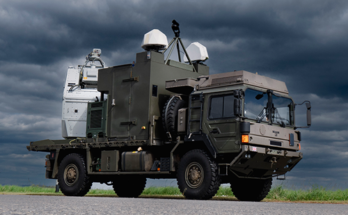
The K-variant utilizes a datalink to connect with the vehicle’s radar and targeting sensors. That datalink cues the missile using those onboard assets. Without that initial sensor hand-off, the K-variant struggles to achieve or maintain a reliable target lock, due to the UAV’s thermal signature being faint to begin with. This gap is exactly what pushed development of the NGSRI.
However, this does not mean retirement is imminent; global users intend to retain and operate the platform, which means a cheaper upgrade path is a necessary long-term solution. The Stinger Life Extension Program (LEP), which the U.S. State Department approved for the NATO Support and Procurement Agency (NSPA) in December 2025, is an example of this effort. Instead of pushing allies toward the NGSRI, the LEP replaces aging components, resetting a stockpile’s shelf life while saving the cost of new missiles.
Raytheon’s European Partnerships
To meet surging NATO demand, Raytheon is doubling global Stinger missile production, with expanded manufacturing centered in the Netherlands. NATO’s replenishment needs will take years to fill, and the buildout reflects that timeline. It also makes a broader point that a legacy system and its successor can be produced for different markets at the same time.
That commitment tracks with recent NATO procurement trends, as allies increasingly lean on the LEP to refurbish existing stockpiles rather than wait on a next-generation platform.
The core of this expansion is a co-production arrangement with Germany’s Diehl Defence, first outlined in an August 2025 memorandum of understanding and now underway. Diehl will produce the missile’s guidance section and source related subcomponents from across Europe. Separately, Raytheon is working with Dutch suppliers to produce additional major Stinger assemblies. Final assembly, testing, and completion of the missile takes place in the Netherlands, and the expanded capacity is also expected to support future work with NATO’s NSPA to meet European demand.
Stinger Retains Global Interest
While the domestic pivot toward the NGSRI signals a change in U.S. inventory priorities, global sales figures from 2025 and 2026 confirm steady international demand. Rather than fading into obsolescence, the Stinger is actively generating major international trade.
In North Africa, the U.S. State Department approved a possible FMS to Morocco on April 15, 2025. Valued at an estimated $825 million, the deal cleared the acquisition of up to 600 FIM-92K Stinger Block I missiles to modernize and expand Morocco’s ground-based air defense capabilities.
This momentum continued directly into mid-2026. On June 11, the State Department approved another key FMS case to Brazil for 100 FIM-92K Stinger missiles and associated support equipment, totaling an estimated $330 million. This sale was specifically requested to aid Brazil in securing South American airspace from illicit trafficking networks, a mission where the reliability and low cost-per-intercept of the Stinger make it a more practical choice than more complex next-generation systems.
The Coexistence Precedent
The assumption that the introduction of a next-generation system forces the immediate retirement of its predecessor is a recurring misconception in defense procurement. In reality, the U.S. has long maintained a highly successful model of coexisting missile families. The relationship between the legacy AGM-114 Hellfire and its successor, the AGM-179 Joint Air-to-Ground Missile (JAGM), represents a similar production dynamic now playing out between the Stinger and the NGSRI.
Since the JAGM entered production in 2018 to replace the Hellfire, the two systems have coexisted actively in both U.S. and international inventories.
A recent example of this dynamic occurred on June 30, 2026, when the U.S. State Department approved a possible FMS to Singapore for an additional 24 AGM-114R Hellfire missiles, bringing their total requested package to 67 missiles at an estimated cost of $22.3 million. Singapore has yet to procure the newer JAGM system, even as it committed to five years of spare parts and logistics support for the Hellfire.
The Singapore case study highlights a critical market reality: for many global partners, the priority is not to acquire the absolute newest technology on the market. Instead, they seek mature, highly reliable systems with established supply chains that can be easily integrated into existing launch platforms without the administrative hurdles, high costs, and lengthy export policy reviews required for brand-new weapons systems. By keeping the Hellfire line open alongside the JAGM, the defense industrial base satisfies this massive market segment.
Where This Leaves the Stinger
The opportunity for the Stinger to remain in active service globally is a matter of strategic necessity rather than a sign of declining capability. By shifting the Stinger’s manufacturing footprint to Europe through co-production agreements with Diehl Defence and Dutch suppliers, Raytheon is decoupling the platform’s future from U.S. domestic procurement and anchoring it directly to the international market.
While the U.S. has not abandoned the Stinger domestically, it has stopped investing in its development. FY2027 budget documents show procurement funding for FIM-92E kits and modifications, but zero research and development funding for the platform itself. That budget has been redirected to the Army’s Maneuver Short-Range Air Defense Increment 3 program to deliver the NGSRI.
Any future evolution of the Stinger will be driven entirely by foreign interest rather than U.S. domestic requirements. Because a brand-new domestic variant would directly compete with the NGSRI and face the same lengthy export hurdles, the Stinger’s future lies in sustaining and incrementally upgrading the global inventory already in place.
Fulfilling this global demand is a long-term endeavor rather than a temporary measure. Much like the concurrent procurement of the Hellfire and the JAGM, the Stinger and the NGSRI are entering an extended period of parallel operation, securing the Stinger’s position in the global market for years to come.

Lauren Estrada has a background in global and cyber intelligence, with a strong interest in communicating technical threats to non-technical audiences. She currently works as an Editor & Analyst with Forecast International and Military Periscope, where she contributes to research and analysis on defense technologies. Her previous experience includes defense technology research, regional risk assessments, client-facing intelligence reports, trend analysis, threat of actor behavior, and cyber-focused research.
While pursuing her B.S. in Global Security and Intelligence Studies at Embry-Riddle Aeronautical University Prescott, Lauren co-led a cross-disciplinary initiative to introduce cybersecurity fundamentals to students across all majors. Her team designed and proposed a course that bridged cybersecurity and non-technical disciplines, fostering inclusive engagement with cyber skills. This work led to speaking engagements at university industry board meetings and the 2025 National Conference on Undergraduate Research in Pittsburgh, PA.