On September 8th, Philippine Defense Minister Gilbert Teodoro was handed a note while speaking about Asia-Pacific security issues at the Seoul Defense Dialogue. “I have a note here, I think this is from China,” Teodoro surmised, before proceeding to read its contents to the audience. The note, which contested the legitimacy of the 2016 United Nations Convention on the Law of the Sea (UNCLOS) South China Sea ruling in favor of the Philippines’ claims to its maritime boundaries, prompted a forceful public rebuke from Teodoro. The tense exchange quickly attained a virality uncommon in the largely formalized and anodyne world of diplomatic forums, but it also served to highlight the mounting intensity of strategic competition between the Philippines and China over the South China Sea. Against this backdrop of mounting maritime pressures and the material superiority of China’s naval and coast guard forces, the Philippines has moved to cultivate deeper defense and diplomatic integration with regional partners, such as Japan and Vietnam, which are struggling against the same currents of potential hegemonic change in the Asia-Pacific.
However, the urgency of the moment has also seen the Philippines pursue more unorthodox diplomatic avenues through which it might buttress its regional position. By 2026, the already slim roster of states that extend diplomatic recognition to the Republic of China (Taiwan) had dwindled to a mere twelve, with the mainland’s momentous rise as a global economic powerhouse steadily rendering the opportunity costs of maintaining formal ties too vast for most external partners to continue bearing. Yet as longstanding tensions over freedom of navigation and national sovereignty across the South China Sea have steadily simmered to a boil, and as regional states have grown more wary of the security vulnerabilities inherent in economic dependency on the mainland while also becoming increasingly uncertain of the reliability of the United States’ commitment to their defense, Taiwan has reemerged as a peculiar spoke in the region’s burgeoning network of renewed partnerships.
Formally, the Philippines closely adheres to the tenets of the One-China policy, having switched recognition from Taiwan to the People’s Republic in the wake of the Nixon shock of the 1970s, alongside many other countries. However, since taking office, the incumbent administration of Ferdinand Marcos Jr. has sought to discreetly and deliberately cultivate deeper bilateral engagement and integration with Taiwan along multiple vectors that extend beyond the traditionally safer havens of trade and investment. Although the Philippines remains rhetorically committed to securing a mutually satisfactory diplomatic resolution to its dispute with the PRC over the South China Sea, its recent steps to build closer ties with Taiwan reflect a growing sense among the Philippine leadership that they have nearly exhausted the capacity of these efforts, pursued in a vacuum, to adequately protect their country’s interests and sovereignty. Although the Philippines attained an important legal and moral victory in the 2016 UNCLOS South China Sea Arbitration ruling, alarming incidents and confrontations between Philippine and Chinese maritime assets have only continued to escalate in intensity and frequency in the years since the ruling. With bilateral overtures to the PRC having so far proven insufficient to fully safeguard the Philippines’ sovereignty, the perception that the country shares a common cause with Taiwan, and that its own future security is intertwined with that of its northern neighbor, has grown more pronounced. In this environment, closer cooperation with Taiwan has begun to appear less like an inflammatory risk and more like a necessary and fundamental counterbalance in the eyes of the Philippines’ current leadership. For Taiwan, the formation of a network of regional states bound by mutual ideological affinities and strategic objectives forms a key pillar of its “three-chain” strategy for retaining its sovereignty amid mounting pressure from the mainland.
Philippine government representatives have sought to stress that the country’s engagement with Taiwan will proceed only along the “non-taboo” avenues permitted by its posture towards the One-China policy. However, recent actions have meaningfully pushed the traditional bounds and grey areas of the relationship. Anchored by less controversial frameworks of economic integration, both explicit rhetorical support for Taiwan’s position and direct engagement with Taiwanese delegations by Philippine officials have risen over the past several years. In April 2025, President Marcos issued an executive decree that significantly loosened decades-old restrictions on talks between Philippine and Taiwanese officials. Releasing direct engagement, at least on a select roster of approved issues, from the grey zone of “informal talks” has since laid the foundations for further reinforcement of the Philippines’ diplomatic relationship with Taiwan. Over the course of 2026, Taiwan and the Philippines have made steady progress towards the planned establishment of a second Taiwanese representative mission in the Philippines, to be located in the city of Cebu. Although the mission’s foremost function is to facilitate activities related to investment and labor, the PRC has detected political and strategic connotations in the move and voiced its opposition to the physical expansion of Taiwan’s representative infrastructure.
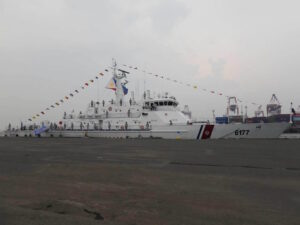
The question of how far the bounds of the relationship can be stretched without incurring more forceful diplomatic or economic blowback from the mainland will be tested most significantly by the two governments’ tentative steps towards outright cooperation in the maritime security sphere. In September 2026, the Philippine non-governmental entity We Protect Our Seas (WPS) Foundation delivered a 600-tonne displacement Taipei-class patrol vessel, recently divested by the Taiwan Coast Guard, into the ownership of the Philippine government. Although the central role played by an intermediary rendered the episode a semi-private affair in a technical sense, the substance of the transfer unmistakably brings engagement close to the “taboo” areas that had previously been assiduously avoided. In late October, Philippine foreign affairs officials raised the prospect that the two governments could pursue unspecified collaborative measures to confront “grey zone” threats to undersea communications cables, but officials subsequently issued a provisional walkback of the claim. Indeed, the Philippines has reason to proceed with some caution in the days and months ahead. In 2025 alone, the Philippines imported nearly $40.0 billion in Chinese goods, and the continued importance of mainland China as a trade partner has so far precluded the Marcos administration from considering the imposition of trade restrictions. In this sense, the Philippines’ proactive cultivation of ties with Taiwan may also be seen as a diplomatic gamble and signaling move, alongside a straightforward means of bolstering its security: one that establishes the conditions to generate mainland concern in a bid to secure a maximally satisfactory agreement at the negotiating table. In either instance, the rapid evolution of bilateral relations is a testament to the manner in which mounting uncertainty in Asia is reshaping the region’s protective structures and generating the potential conditions for a coalescence of actors sharing a common strategic vision.

A lifelong enthusiast of armored vehicles, Thomas serves as an analyst on Forecast International's Military Vehicles Forecast product. In addition, Thomas is responsible for updating the reports and analysis within Forecast International's International Military Markets – Latin America & Caribbean product. He also provides analysis for Forecast International's Airborne Retrofit & Modernization Forecast. Before this assignment, Thomas served as a research assistant for Forecast International's analytical team and has made written contributions to the Civil Aircraft Forecast, Military Aircraft Forecast, and Rotorcraft Forecast services. Thomas derives his knowledge from a multidisciplinary background, with a strong emphasis on the history and politics of Russia and the former satellite republics of the Soviet Union. He has studied in the Russian Federation at Saint Petersburg State University and is proficient in the Russian language at an advanced level.