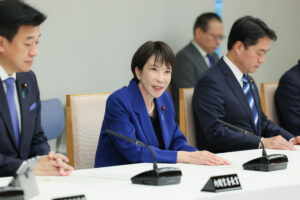
Taking place in the broader context of the country’s evolving reorientation of its strategic posture amidst a time of escalating interstate tensions and global instability, on May 27th the Japanese Diet approved long-gestating plans for the creation of a centralized entity for intelligence accumulation and analysis and the identification of counter-intelligence threats. Designated the National Intelligence Bureau, the newly approved institution will formally come into being on July 31st, ushering in the one the most consequential restructurings of Japan’s intelligence community (IC) seen in the post-war era.
For decades, the profile of Japan’s decentralized and institutionally constrained national intelligence apparatus was shaped by the bitter memories and lessons of the militarist era and the Second World War, a period in which powerful autonomous institutions like the Tokko Special Higher Police and Kempeitai military police routinely violated human rights and acted without accountability or oversight from civil authorities. However, as the events of the Second World War have steadily receded out of living memory and Japan can lay claim to nearly a century of sustained democratic, consultative governance, the question of whether the country’s extant intelligence architecture is up to the task of responding to its modern challenges amidst mounting threats from the Russian Federation and a rising China progressively began to mount in defense and foreign policy circles over recent years. Over the past two decades, governmental cognizance of the country’s intelligence vulnerabilities and limitations resulted in intelligence and security reform being pursued in fits and starts, most notably through the passage of the controversial Act on the Protection of Specially Designated Secrets or State Secrecy Law under the leadership of the Shinzo Abe government in 2013. However, deepening anxieties surrounding the trajectory of the current strategic environment and the optical need for Japan to be seen proactively contributing to its own defense and security, the incumbent Takaichi administration’s adoption of IC reform as a core policy pillar and the Liberal Democratic Party’s (LDP) especially dominant legislative position after the recent 2026 general elections have all catalytically facilitated the realization of new structural reforms in a more comprehensive direction.
The Sanae administration hopes for the formation of the National Intelligence Bureau to resolve several long-standing deficiencies in Japan’s preceding IC framework in one swoop. Japan’s intelligence community has long been characterized by structural fragmentation. Although the Cabinet Intelligence and Research Office (CIRO), first founded in the 1980s and serving under the direct purview of the Prime Minister, fulfilled some of the functions of a first-tier conventional intelligence body, its limited legal authority and material scope and deficit of continuity with regards to the retention of personnel significantly constrained its efficacy as a nominal peer to the intelligence bodies of Japan’s global and regional allies such as the United States, United Kingdom and Australia.
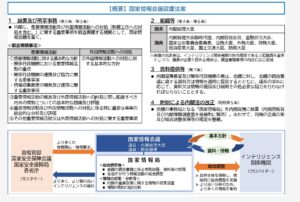
Japan’s other entities tasked with the execution of intelligence and counter-intelligence functions, such as the domestically oriented Public Security Intelligence Agency (PISA) under the Ministry of Justice, the Security Bureau under the National Police Agency and the analytical bodies of the Ministry of Foreign Affairs, have traditionally been beset by informational and ministerial silos and a relative deficit of clarity regarding their individual missions and purpose. Utilizing the existing foundation of the CIRO as a starting point, the formation of the National Intelligence Bureau is intended to provide a central locus through which intelligence gathered from these disparate entities can be synthesized and disseminated to policy makers, ideally providing the executive with both a clearer picture of the overall intelligence landscape and allowing it to more effectively leverage the resources of the whole IC towards the fulfillment of shared national objectives and policy priorities. Central coordination will be directed through the body of a new National Intelligence Council. Kazuya Hara, incumbent director of the CIRO and a National Police Agency veteran, has been tapped by the Takaichi administration to transition into being head of the National Intelligence Bureau. Per recent reporting by Yomuri Shimbun the new body will absorb the 700-personnel of the CIRO as its institutional foundation. However, over the coming months and years, the government intends to steadily scale up the bureau’s manpower pool, recruiting a dedicated body of specialists from both other ministries and the private sector alike.
The establishment of the National Intelligence Bureau in 2026 not only reflects the tentative realization of long sought after security reforms and long-developing regional dynamics, but can also be viewed in the context of the unique pressures and anxieties of the present moment in Japanese foreign policy. Indeed, the formation of the National Intelligence Bureau is liable to just be the first major step on a longer road towards the development and maturation of a rejuvenated Japanese IC, with plans for the development of a dedicated foreign intelligence entity slated for realization as early as the coming year according to recent governmental deliberations and press reporting. With the United States steady adoption of a more transactional posture towards security alliances and the American military umbrella presently engaged once more in conflict in the Middle East, Japanese leaders have found renewed importance in the country being able to materially and optically assert its capacity to serve as an equal partner and guarantor of its own and regional security. Other recent reforms in the security domain, such as the loosening of export restrictions on Japanese defense products and deepening intelligence coordination with Australia, likewise reflect the perceived urgency of cultivating a robust network of alternative regional alliances and buttressing Japan’s own resilience to today’s threats.

A lifelong enthusiast of armored vehicles, Thomas serves as an analyst on Forecast International's Military Vehicles Forecast product. In addition, Thomas is responsible for updating the reports and analysis within Forecast International's International Military Markets – Latin America & Caribbean product. He also provides analysis for Forecast International's Airborne Retrofit & Modernization Forecast. Before this assignment, Thomas served as a research assistant for Forecast International's analytical team and has made written contributions to the Civil Aircraft Forecast, Military Aircraft Forecast, and Rotorcraft Forecast services. Thomas derives his knowledge from a multidisciplinary background, with a strong emphasis on the history and politics of Russia and the former satellite republics of the Soviet Union. He has studied in the Russian Federation at Saint Petersburg State University and is proficient in the Russian language at an advanced level.