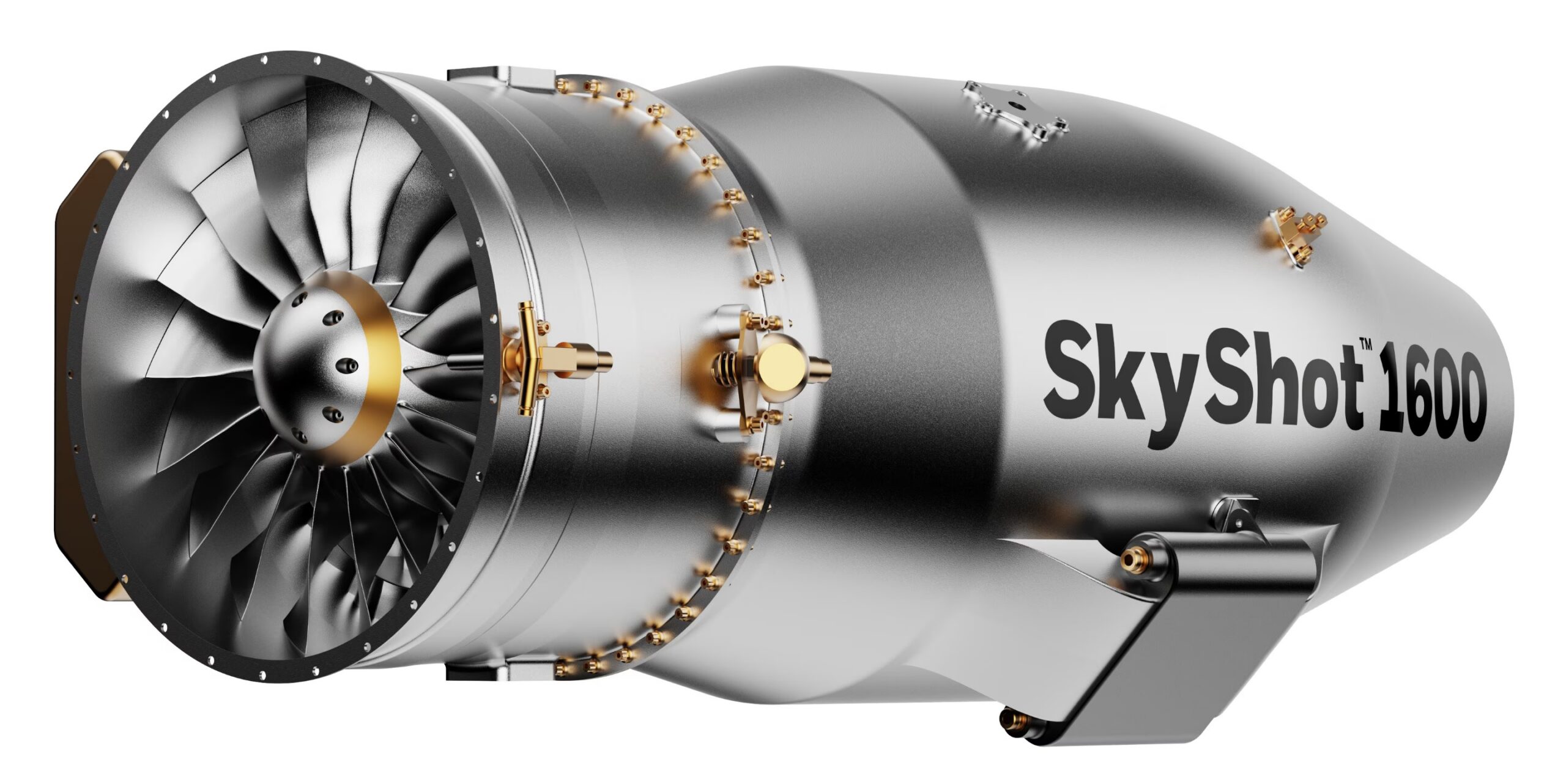
The U.S. Air Force has awarded a prototype contract to Honeywell covering the design of a lightweight engine for autonomous aircraft. The design will be an evolution of the company’s new small-thrust-class engine, the SkyShot 1600.
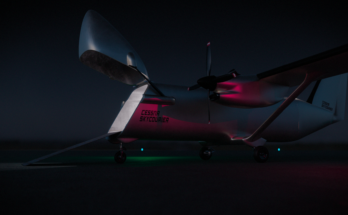
The Air Force’s Collaborative Combat Aircraft (CCA) program involves the development of a large fleet of autonomous, relatively low-cost “loyal wingman” drones designed to fly alongside manned fighters like the F-22 and F-35 to serve as extended sensors, flying weapons bays, or tactical decoys. Should Honeywell secure a position as the engine-maker of choice for these drones, it could mean producing hundreds, if not thousands, of small engines for the USAF in the coming years.
The contract to prototype the engine was issued through SOSSEC, Inc. under the Air Force’s Propulsion Consortium Initiative 2.0, which falls under the Air Force Life Cycle Management Center’s broader push to advance propulsion technology for next-generation unmanned platforms.
The contract falls under an Other Transaction Authority agreement, a contracting mechanism the Pentagon has increasingly leaned on to move faster and work with companies outside the traditional defense industrial base. For Honeywell, it represents an entry point into the propulsion competition for this emerging market, which the Air Force and other services are betting heavily on in the years ahead.
Honeywell designed the SkyShot 1600 to meet the requirements of CCAs, including the ability to operate while under the high G-force loads expected from the drones in combat. The engine’s flexible architecture allows it to be produced in either a turbojet or turbofan configuration, depending on whether lightweight power or long-range efficiency is the primary goal. The engine can provide between 800 and 2,800 pounds of thrust.
Honeywell says a significant percentage of the materials in the engine can be made using additive manufacturing or produced with high-volume manufacturing techniques like metal injection molding, allowing engines to be built quickly and reducing the risk of supply chain failures.

A lifelong aviation enthusiast, Douglas Royce currently co-edits Forecast International's Military Aircraft Forecast and Aviation Gas Turbine Forecast. As such, he plays a key role in many important projects that involve market sizing and forecasting for various segments of the world aerospace industry, as well as demand for related systems.