For years, U.S. and allied nation military planners have been seeking to improve planning, technology development and deployment of advanced systems for command, control and communications across all domains of a potential conflict space. This has been an acutely imperative concern for disparate nations conducting operations within each other’s airspace. Recent events in the start of U.S./Israeli military strikes on Iran, have profoundly illustrated the importance of this effort.
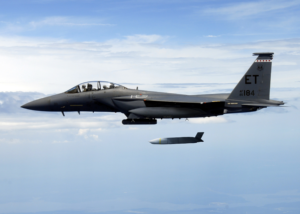
According to U.S. Central Command, three U.S. F-15E Strike Eagles were shot down two days ago, apparently by friendly forces within Kuwait. The six aircraft operators were also reported to have ejected safely. While this could obviously have turned out much worse, the loss of three U.S. jet fighters is no small matter, and serious questions will be raised about how communication and coordination might have broken down to cause the incident.
The shootdown may also raise questions about why multiple self-protection systems, such as missile countermeasures on the aircraft apparently were not utilized. However, at this point, we are not getting a clear enough picture of what events led to the accident to draw any real conclusions.
What is highly likely, at the very least, is that concerned parties likely in the U.S. and Kuwait were not on the same page. This is where the need for infallible systems and operations for command, control and communications comes into play.
Seeing as the U.S. has taken a strong leadership role in making sure that things like this do not happen, some shock and confusion is even more warranted. Coordinating with international partners, with joint operations in mind, has been the going concern of the multi-billion dollar, Combined All-Domain Joint Command and Control (CJADC2) effort since the start of the decade.
CJADC2 is a U.S. Air Force, Army, Navy, and coalition forces effort combining RDT&E efforts with development, production, procurement, and deployment of key systems to enable vast communications networks and links in the sensor-to-shooter chain. For the Pentagon, the three biggest, driver programs within the larger effort are the Air Force’s Advanced Battle Management System (ABMS), the Army’s Project Convergence, and the Navy’s Project Overmatch.
Once again, while it’s too early to tell what exactly transpired in the jet fighter shootdown, at this point, hostile disruption of communications also cannot be ruled out. Massive electronic warfare operations, launched by attackers and defenders alike, has been a growing feature of warfighting since Russia’s invasion of Ukraine.
Within the auspices of the more strictly U.S.-centered JADC2 framework, electronic warfare in general and cyberwarfare in particular have been recognized as steadily growing threats, and much of the effort rightly focuses on network security. Developing methods for countering anti-access/area denial (A2/AD) measures is a major focus of recent RDT&E activity.

The combined efforts of JADC2 within the U.S. would seem to need little in the way of added support in terms of budget allocations. Relying on recent funding planning, the various efforts within the larger program will likely see combined spending of nearly $10 billion into the next decade.
It should go without saying, that the accidental U.S. jet shootdown will likely add renewed interest in steady support and investment for advancing All-Domain Command and Control efforts in the months ahead.

Andrew Dardine is lead analyst for Forecast International's Defense Electronic Systems group. He is the primary author of Forecast International's Electronic Warfare Forecast and co-author of Electro-Optical Systems Forecast and C4I Forecast. Andrew is also a regular contributor to FI's Defense & Security Monitor blog, offering insights into developing technologies such as directed-energy and next-generation jamming systems. His analysis of such vital market areas as EO/IR systems and electronic countermeasures technology has been cited in Defense News, Aerospace Daily, and Bloomberg Businessweek, among other news media. He has also written about the electronic defense market for Aviation Week and the Journal of Electronic Defense.