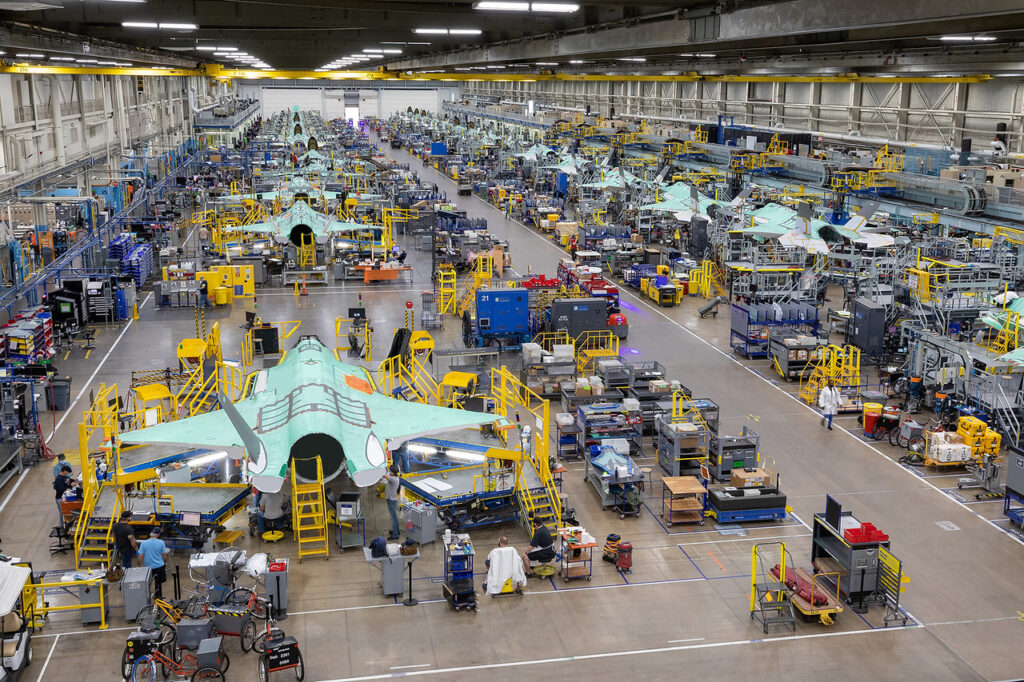
During a hearing before the U.S. Senate Armed Services Committee on rebuilding American critical minerals supply chains, Assistant Secretary of War for Industrial Base Policy Michael Cadenazzi stated, “The very foundation of our National Defense, our economic prosperity, and our technological leadership rests upon a reliable supply of essential materials.” Those essential materials are Critical Minerals which he goes on to state are “not an abstract economic classification, it is a roll call of the essential building blocks of modern warfare. The Neodymium Iron Boron magnets in the guidance fins of a Tomahawk missile, the Cobalt in the high-performance alloys of an F-35’s jet engine, the Gallium Arsenide in the advanced radar systems that protect our fleet, the Nickel in the batteries that power our soldiers’ communications gear–these are not commodities, they are capabilities. They represent the margin of victory in a potential conflict.”
The important factor to note when it comes to these materials is the critical aspect of their designation. Critical minerals, much like Energetics, are defined as minerals which “are essential to the economic or national security of the United States; the supply chain of which is vulnerable to disruption including from restrictions from foreign political risk and military conflict; and serve an essential function in the manufacturing of a product, including for defense-related applications.” In other words, the very building blocks that the U.S. Defense Industrial Base (DIB) uses to replenish legacy military equipment and to develop and produce cutting-edge defense technology is dangerously dependent on minerals that, for the most part, are procured from abroad via fragile diplomatic agreements.
Critical Minerals are Everywhere
When we hear the word mineral, we may think of the traditional sense of such materials like precious stones or naturally occurring materials like gypsum or quartz that we use to produce objects we interact with every day. In reality, there are a variety of minerals that we use to manufacture far more significantly purposed products. For instance, Tungsten, an exceptionally dense and hard metal with a melting point higher than 6,100°F, is used in kinetic-energy penetrators that are housed inside armor-piercing ammunition. One such product is General Dynamics’ Armor Piercing Fin Stabilized Discarding Sabot-Tracer (APFSDS-T) round which counts on a tungsten penetrator for its lethality in combat.
Germanium is another major component in defense technology, not just for the U.S. military but around the world as well. The lustrous, brittle metalloid is incredibly essential in the production of lenses for infrared optics and sensors, thermal weapon sights, and night-vision equipment. Another element critical in advanced electronics is Gallium, a silvery substance with a low melting point that is used to make substances such as Gallium Arsenide and Gallium Nitride which are vital in semiconductors and optoelectronic devices. Gallium is crucial in Active Electronically Scanned Array (AESA) radars used in fighter jets like the F-35 Lightning II and within high-powered electronic warfare jamming systems. Finally, other metalloids such as Manganese, Titanium, and Magnesium are used in the classified metallurgic processes that result in advanced composite armor outfitted on main battle tanks such as the U.S. Army’s Abrams, the German Leopard 2, and the British Challenger 2.
A Troubled Supply Chain
A dangerous aspect that many of the previously mentioned materials have in common is the near monopolization that China has on the mining and refining processes for these critical minerals. As it stands today, China accounts for 99% of the world’s low-purity Gallium production and 60% of global Germanium production, with the U.S. importing approximately $15 million of Gallium metal and $120 million in Gallium Arsenide from various countries, including China. A significant instance that directly affected the U.S. DIB was China’s Gallium and Germanium export controls implemented in August 2023 and a ban on all Gallium exports to the U.S. in December 2024 in response to tariffs and restrictions placed on Chinese goods, namely its microchip sector. Currently, China has suspended the ban on exports of Gallium, Germanium, and Antimony until November 27, 2026, although exporters must still obtain licensing from Beijing to ship the substances abroad.
As a result of such overreliance on less than ideal sources, the Department of Defense (DoD) has begun to invest heavily in domestic endeavors to reshore critical mineral production. For example, it provided $18.1 million in December 2025 to 5N Plus Inc. to expand its refining capacity for Germanium metal at their St. George, Utah, facility. The DoD also invested $400 million and took an ownership stake in Las Vegas-based MP Materials, a company with production facilities in California currently producing rare earth magnets and refining rare-earth materials.
The Trump administration has also played a part in the ongoing efforts to break the reliance on the importation of critical minerals. The One Big Beautiful Bill Act appropriated $8.3 billion to the DIB fund which, in part, allows for investment in domestic critical minerals supply chains. An Executive Order was also signed in July 2026 that limited defense contractors’ access to waivers to procure critical minerals and components from Foreign Entities of Concern (FEOCs), such as China; these waivers will completely cease to be issued as of January 1, 2027. Instead, contractors are required to form a mitigation plan to procure critical minerals and components from domestic producers or allied nations.
A Rushed Approach for an Urgent Problem
Although much of the planning to reshore critical mineral production is absolutely necessary as the facts stand today, the method and expected outcomes may be too ambitious. No Gallium has been refined domestically since 1987; we currently have no active Tungsten or Cobalt mines or refineries in the United States; and we rely almost exclusively on the importation of Titanium, Germanium, Gallium, and Graphite with little to no domestic production. The robust investment in the U.S. DIB will allow for the reshoring of some aspects of critical mineral supply chains needed to secure the DoD’s defense needs, yet these endeavors may take years if not decades to fully become operational. In some instances, mines and refineries have just begun to be planned and have not even broken ground. The issue at hand is an immediate one; the U.S. DIB cannot catch up to decades of negligence of such a vital aspect of our military strategy, and so, we have to look to diplomacy and alliances to maintain our defensive posture.

Juan Lopez pursued an undergraduate degree in Political Science with an emphasis in International Relations and a minor in Russian studies from the University of California, Riverside. Juan’s diverse background includes his work as a staffer in the U.S. House of Representatives and in federal law enforcement which gave him extensive experience and knowledge in federal government operations, international affairs, counter terrorism, and national security. His interests include land-based weapon systems, small arms, military fixed wing aircraft, and Latin American relations. He is proficient in the Spanish language at a native level.