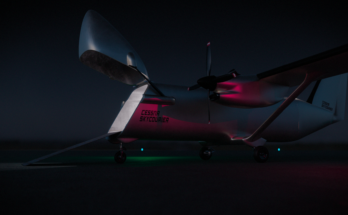
The New York Times is reporting that the new Air Force One, a luxury Boeing 747-8 given to the White House by the Qatari government, was left behind after its trip to Europe earlier in the week, when its lack of critical self-protection was determined to be a safety issue. The missing defense technology in question, the Large Aircraft Infrared Countermeasures (LAIRCM) system, has been virtually standard for all large military, as well as head-of-state, and VVIP aircraft for over twenty years.
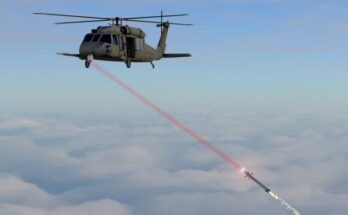
Launched in the aftermath of 9/11, LAIRCM was deigned to provide effective defensive capability for transport and tanker aircraft against the IR Man-Portable Air Defense Systems (MANPADS) threat, which at the time was perceived as very pressing. Since then, the threat has not diminished and has even grown with the rise of armed unmanned systems. The lack of LAIRCM on aircraft important as Air Force One would definitely be justification enough to leave it on the ground, especially now that its vulnerability is world news.
LAIRCM is a laser-jammer-equipped version of the U.S. Navy’s AAQ-24 Directed IR Countermeasure (DIRCM) system which is installed on a wide variety of USSOCOM and U.K. Special Operations C-130s aircraft among others. Using a multiband laser mounted in a small pointer/tracker turret, and with an advanced integrated missile warning system, it requires no operator intervention after activation.
More broadly, the system consists of five basic elements: a control indicator unit; a missile warning system, which may consist of either staring ultraviolet sensors or infrared sensors, or both; a fine track sensor; a countermeasures processor; and a laser jam source. The countermeasures processor is the master system controller and the interface to subsystems.
Since the start of full-rate production around 2003, the system has been sold through the U.S Foreign Military Sales (FMS) program to multiple nations and virtually every major head-of-state, even the Qatari government. In September 2019, the State Department approved an FMS to the nation of two LAIRCM systems and related equipment.
Last month, the system, was approved for sale through the program to the United Kingdom. Named Guardian for all UK applications, the $160 million request included 36 Laser Turret Assemblies (28 installed, 8 spares); and 18 system processor replacements (10 installed, 8 spares) as well as other support systems.
Moving forward, LAIRCM system should continue to be produced and supported into the next decade. In the FY27 defense budget the U.S. Air Force has allocated $442.2 million for procurement through FY31. According to the service, LAIRCM is currently installed on over 54 aircraft types and over 1200 aircraft flown by the U.S. and allied nations.
In August 2024, LAIRCM prime contractor Northrop Grumman received an eight-year, $378.9 million contract for repair and sustainment. As usual, the award further involves an FMS component, this time for system users, Canada, India, Bahrain, NATO, Saudi Arabia, Japan, New Zealand, South Korea, and the United Arab Emirates.

Andrew Dardine is lead analyst for Forecast International's Defense Electronic Systems group. He is the primary author of Forecast International's Electronic Warfare Forecast and co-author of Electro-Optical Systems Forecast and C4I Forecast. Andrew is also a regular contributor to FI's Defense & Security Monitor blog, offering insights into developing technologies such as directed-energy and next-generation jamming systems. His analysis of such vital market areas as EO/IR systems and electronic countermeasures technology has been cited in Defense News, Aerospace Daily, and Bloomberg Businessweek, among other news media. He has also written about the electronic defense market for Aviation Week and the Journal of Electronic Defense.