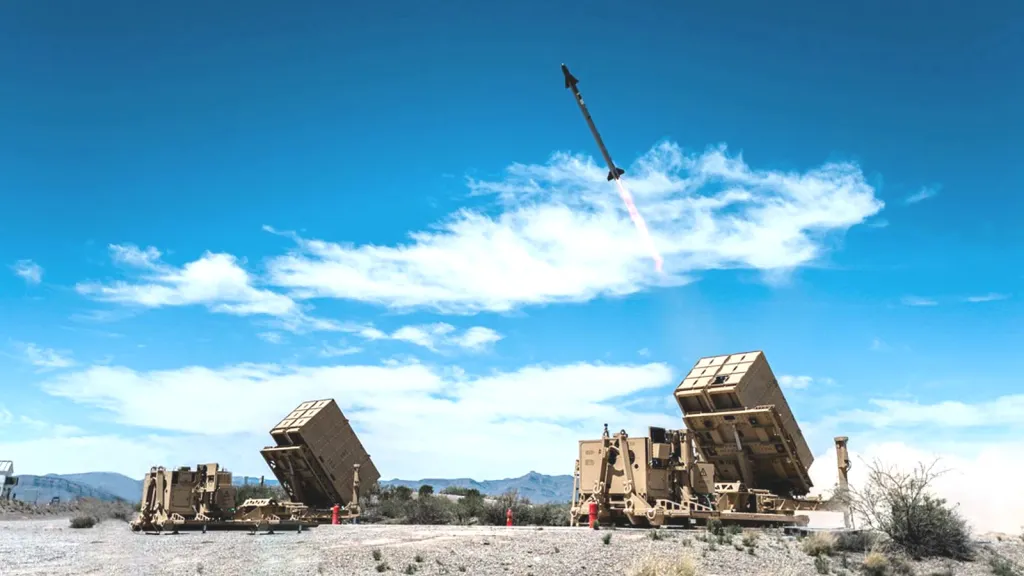
WASHINGTON, D.C. — Boeing has entered a strategic partnership with Anduril Industries to compete in the U.S. Army’s Integrated Fires Protection Capability (IFPC) Increment 2 Second Interceptor program. Under the agreement, Anduril Rocket Motor Systems will supply the solid rocket motors for Boeing’s mid-range interceptor proposal.
The collaboration follows the U.S. Army’s Dec. 5 award of an Other Transaction Authority (OTA) project agreement to Boeing. The initiative is part of a broader effort to defend fixed and semi-fixed sites against low-flying aerial threats, specifically subsonic and supersonic cruise missiles and militarized drones. The Boeing-Anduril proposal is intended to bridge the gap between existing short-range and long-range air defense systems with a more cost-effective solution.
The Competitive Landscape
The Army’s search for a “Second Interceptor” has drawn interest from several major defense contractors. These candidates must be compatible with the Enduring Shield launcher, currently manufactured by Leidos subsidiary Dynetics.
- Lockheed Martin: The aerospace giant secured its own OTA agreement in October 2025. Lockheed is reportedly developing a compact, high-speed interceptor in collaboration with AeroVironment, focusing on high magazine depth to allow up to 18 missiles per launcher.
- RTX (Raytheon) & Rafael: This partnership is offering SkyHunter, a U.S.-manufactured variant of the Israeli Tamir interceptor used in the Iron Dome system. The team recently established a production facility in Arkansas to support high-volume manufacturing of the missile.
- Dynetics (Leidos): As the incumbent provider of the IFPC launcher, Dynetics remains a central player. While they currently provide the initial interceptor (the AIM-9X Sidewinder), the company is positioning itself as a primary integrator for the new secondary interceptor competition.
The U.S. Army plans to evaluate these digital and physical prototypes through 2026 before selecting vendors to move forward into the formal prototyping and live-fire demonstration stages.
This development addresses a critical vulnerability in the U.S. defense industrial base: the supply of solid rocket motors (SRMs). For decades, the SRM market has been a duopoly dominated by Northrop Grumman and L3Harris (Aerojet Rocketdyne). By partnering with Anduril, Boeing is validating a “non-traditional” defense entrant, potentially easing supply chain bottlenecks that have hampered missile production since the onset of the conflict in Ukraine.
Geopolitically, the IFPC program is a cornerstone of the Pacific Deterrence Initiative. The U.S. military is under pressure to deploy more “magazine depth”—cheaper, more numerous missiles—to counter the threat of massed cruise missile and drone swarms in the Indo-Pacific, particularly for the defense of critical hubs like Guam.

A military history enthusiast, Richard began his career at Forecast International as editor of the World Weapons Weekly newsletter. As the Internet became central to defense research, he helped design the company’s Forecast Intelligence Center and now coordinates the FI Market Recap newsletters for clients. He also manages two blogs: Defense & Security Monitor, which covers defense systems and international security issues, and Flight Plan, focused on commercial aviation and space systems.
For more than 30 years, Richard has authored Defense & Aerospace Companies, Volume I (North America) and Volume II (International), providing detailed data on major aerospace and defense contractors. He also edits the International Contractors service, a database tracking all companies involved in programs covered by the FI library. Richard currently serves as Manager of the Information Services Group (ISG), which develops outbound content for both Forecast International and Military Periscope.