 Source: U.S. Special Operations Command North
The U.S. invasion of Venezuela raises fundamental questions about how Washington now defines its national security interests and how far the current administration is willing to go to pursue them. Under President Trump, these interests appear increasingly paramount, overriding traditional constraints, norms, and even long-standing alliances.
Trump has a well-established history of pushing the limits of executive power and shattering political conventions. From dismantling parts of the federal government to defying judicial orders, this administration has repeatedly demonstrated an inclination to operate outside traditional guardrails. Of course, the Venezuela operation was not entirely unexpected. Trump foreshadowed the invasion, at one point claiming that President Nicolás Maduro’s “days are numbered.” While some viewed these statements as rhetoric intended to influence Maduro, it is clear now that Trump was plainly laying out his plans for regime change.
Public messaging from the U.S. has struggled to reconcile lofty rhetoric with more transactional motivations. The president and other administration officials have mentioned values like freedom, security, and justice, to rationalize the operation, while simultaneously citing Venezuela’s oil reserves and its importance to U.S. hemispheric influence. That juxtaposition underscores a broader theme of this presidency. Values are invoked, but the administration is driven by national security and economic interests, even at the expense of international norms.
For Venezuela itself, it is not clear whether a coherent plan exists for what comes next. Confusion is already evident. Trump has stated the United States will “run” Venezuela and that the country’s interim leader, Delcy Rodríguez, is aligned with Washington. Yet her initial public statements suggested otherwise. Her rhetoric has since shifted toward calls for “balanced and respectful relations with the United States” and collaboration, the mixed signals raise doubts about how much alignment truly exists. Trump has also raised the idea of additional military action if the government does not comply, raising the possibility of the U.S. getting sucked into a prolonged conflict. Trump’s assertion that the U.S. must “nurse the country back to health” before elections can be discussed sounds eerily familiar. It has not been long since the war in Afghanistan came to a whimpering end; we must ask if the U.S. is really prepared for another open-ended intervention. The variables are many, and my colleague Thomas Dolzall provided valuable insight into some of the internal factors at play within the Venezuelan government and society at large.
The Venezuela operation also raises broader questions about U.S. ambitions in the Western Hemisphere and beyond. Washington has repeatedly cited drugs as a primary justification for targeting the Maduro regime. Yet Venezuela plays a comparatively small role in the U.S. drug trade when measured against trafficking networks in Mexico and Colombia. Given that the U.S. has already conducted surveillance operations over Mexico, does that logic eventually extend to military intervention there as well? Senator Lindsey Graham has already publicly grouped Colombia and Cuba into what he described as a broader “drug caliphate.”
This emphasis on drugs appears secondary to another recurring theme: resources. Oil features prominently in Trump’s own comments, which is consistent with past statements in other regions. This includes his remarks about a desire to take over Gaza to transform it into a new real estate venture. For Trump, foreign policy is often framed through the lens of economic interests, power, and influence rather than restraint or precedent.
That mindset has surfaced elsewhere. Early in the administration, Trump described Greenland as a strategic asset of immense value and has only doubled down on that view since the Venezuela invasion. Would Washington actually consider seizing the territory by force despite pushback from NATO allies? A U.S. annexation of Greenland would surely fracture the NATO alliance. Similarly, Trump has spoken openly about making Canada the 51st state. While a direct military confrontation is unlikely, such rhetoric raises questions about how far he is willing to go to extract concessions on trade and other matters. It signals a further strain on a relationship between two historically close allies.
Beyond the Western Hemisphere, the implications extend to Asia, the Middle East, and Africa. The international community is watching closely, and not just America’s allies. Russia remains locked in a lengthy war driven by Moscow’s own claims of domestic security. Meanwhile, China continues to loom over Taiwan, with persistent questions about if and when Beijing might move to retake the island nation by force.
Lost amid these global shifts is the role of Congress. A Republican-controlled legislature has largely aligned with the White House as the administration advances an expansive agenda, often ceding its own authority to the executive branch. There have been efforts toward restoring Congress’ traditional oversight of war powers, but progress on that front remains elusive. Even if lawmakers withhold approval for future military action, it is an open question who would stop an administration that has already demonstrated a willingness to go against the grain.
Ultimately, the Venezuela operation is about more than one country. It reflects an evolving view in Washington that U.S. national security interests justify increasingly aggressive action, even when the end state is unclear. How the international community responds, and how adversaries interpret these moves, may shape not only the next conflict but the global order that follows.

Shaun's deep-rooted interest in military equipment continues in his role as a senior defense analyst with a focus on the United States. He played an integral role in the development of Forecast International's U.S. Defense Budget Forecast, an interactive online product that tracks Pentagon acquisition programs throughout the congressional budget process. As editor of International Military Markets – North America, Shaun has cultivated a deep understanding of the vast defense markets in the United States and Canada. He is a regular contributor to Forecast International's Defense & Security Monitor blog and has co-authored white papers on global defense spending and various military programs.
image sources
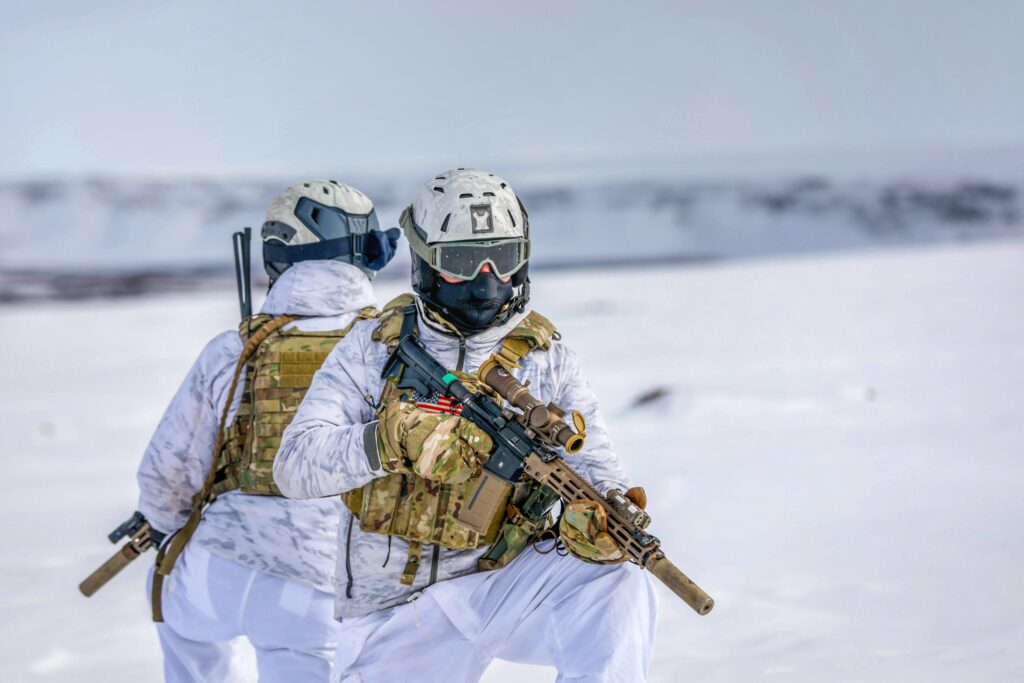
- Special Forces Operators conduct cold weather training: U.S. Special Operations Command North