 Source: U.S. Air Force
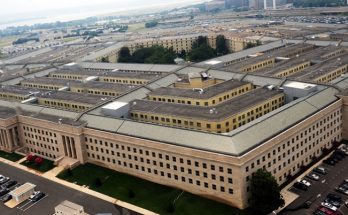
The Pentagon has released a new National Defense Strategy (NDS) that represents a shift in Washington’s strategic posture, placing renewed emphasis on homeland defense, bolstering U.S. influence in the Western Hemisphere, rebalancing security responsibilities for allies and partners, and rebuilding the domestic defense industrial base.
An introductory message from Defense Secretary Pete Hegseth echoes the administration’s “America First” framework. “No longer will the Department be distracted by interventionism, endless wars, regime change, and nation building,” he states. Recent U.S. actions suggest otherwise. The operation in Venezuela stands out as the prime example countering this stance, but Washington has also raised the idea of potential regime change or intervention in Iran, Cuba, Greenland, Panama, and Haiti.
Hegseth concedes that a focus on the Western Hemisphere “does not mean isolationism.” In practice, while U.S. may not be seeking to deploy large numbers of troops to potential conflict zones, it has demonstrated a clear willingness to rely on airstrikes, special operations forces, and other coercion mechanisms to pursue its national security and economic interests, even if those actions run contrary to long-standing international norms.
A critical theme that appears throughout the document is an increased emphasis on burden sharing among U.S. allies, a long-running priority under President Trump. Another key focus is rebuilding the U.S. defense industrial base, including re-shoring critical industries and enabling the ability to produce military equipment at scale for both U.S. forces and allied and partner nations. These policy stances have already been articulated by the Trump administration over the past year; the new NDS largely codifies the Pentagon’s responsibility for putting them into practice.
Homeland Defense & Western Hemisphere
Homeland defense is the strategy’s top priority. The strategy calls on U.S. partners in the Western Hemisphere to do more to counter illegal immigration and the drug trade. It also outlines a broad spectrum of military threats, including nuclear weapons, conventional attacks, space-based and cyber threats, and electronic warfare, as well as the potential for terrorist attacks.
The document highlights Canada’s broader role in defending against airborne and maritime threats, even as the administration’s relationship with Ottawa has deteriorated in recent months. It also outlines a desire to secure key terrain in the Western Hemisphere, including Greenland and the Panama Canal. The Pentagon will also continue investing heavily in the Golden Dome program that aims to defend the U.S. from large missile barrages, drones, and other advanced airborne threats.
China
On China, the strategy adopts a noticeably less aggressive tone than the previous NDS, released by President Biden in 2022. “We will deter China in the Indo-Pacific through strength, not confrontation,” the new strategy states, adding that the U.S. seeks “a stable peace, fair trade, and respectful relations with China.” The issue is framed largely in economic terms, with the primary objective being to prevent China from blocking U.S. economic interests in the region. At the same time, the document makes clear that the U.S. will not ignore China’s ongoing military buildup. The NDS calls for a “strong denial defense along the First Island Chain,” and it presses regional allies to contribute more to collective defense in the Indo-Pacific.
The Pentagon says it will seek to open a wider range of military-to-military communications with the People’s Liberation Army, focusing on strategic stability, deconfliction, and de-escalation.
Notably, the strategy does not mention Taiwan, the foremost security issue in the Indo-Pacific. That omission represents a significant departure from previous iterations of the NDS and suggests a recalibration of how the U.S. frames its actions in the region.
Russia
Russia is described as a “persistent but manageable threat to NATO’s eastern members for the foreseeable future.” The strategy cites Russia’s nuclear, undersea, space, and cyber capabilities as potential tools that could be used directly against the United States. While the U.S. says it will be prepared for these threats to the homeland and will “continue to play a vital role in NATO itself,” the document places increasing responsibility on Europe.
The Trump administration says that Europe can afford to counter Russia largely on its own, including maintaining support for Ukraine. The strategy notes that Europe significantly exceeds Russia in economic output and highlights NATO’s revised commitment for members to spend 5 percent of GDP on defense, including 3.5 percent on core military capabilities.
Iran
The strategy cites U.S. strikes against Iran’s nuclear infrastructure, claiming the country’s nuclear program was “obliterated.” However, it remains unclear how quickly Iran could resume uranium enrichment. The document also points to the degradation of Iranian-aligned groups like Hezbollah and Hamas, while acknowledging that they may seek to rebuild. The strategy mentions ongoing ties with Israel, but even this relationship is subject to an anticipated decline in U.S. security assistance in the future. The document also briefly outlines opportunities to bolster arms trade with other Middle Eastern countries.
North Korea
North Korea is described as a direct threat to South Korea and Japan. North Korea’s military, despite being poorly maintained, includes a large conventional force and missiles capable of striking neighboring countries. Pyongyang also continues development of its nuclear capabilities, which is identified as a growing threat to the U.S. Despite the potential threat to the U.S., the document emphasizes that “South Korea is capable of taking primary responsibility for deterring North Korea.”
Final Thoughts
References to “limited U.S. support” appear throughout the document, underscoring Washington’s intent to remain engaged, but often at arm’s length. At the same time, the Trump administration has adopted an aggressive foreign policy approach that has resulted in tensions with several close allies and increased uncertainty about military intervention across the globe. Finally, the defense industrial base remains a key element of the NDS. The administration’s ongoing military transformation efforts and increased defense investment require more robust domestic production lines and supply chains. The administration hopes that a larger defense industrial base will be better positioned to support increased production for platforms across multiple domains, such as maritime assets, munitions, air defense capabilities, and drones.

Shaun's deep-rooted interest in military equipment continues in his role as a senior defense analyst with a focus on the United States. He played an integral role in the development of Forecast International's U.S. Defense Budget Forecast, an interactive online product that tracks Pentagon acquisition programs throughout the congressional budget process. As editor of International Military Markets – North America, Shaun has cultivated a deep understanding of the vast defense markets in the United States and Canada. He is a regular contributor to Forecast International's Defense & Security Monitor blog and has co-authored white papers on global defense spending and various military programs.
image sources
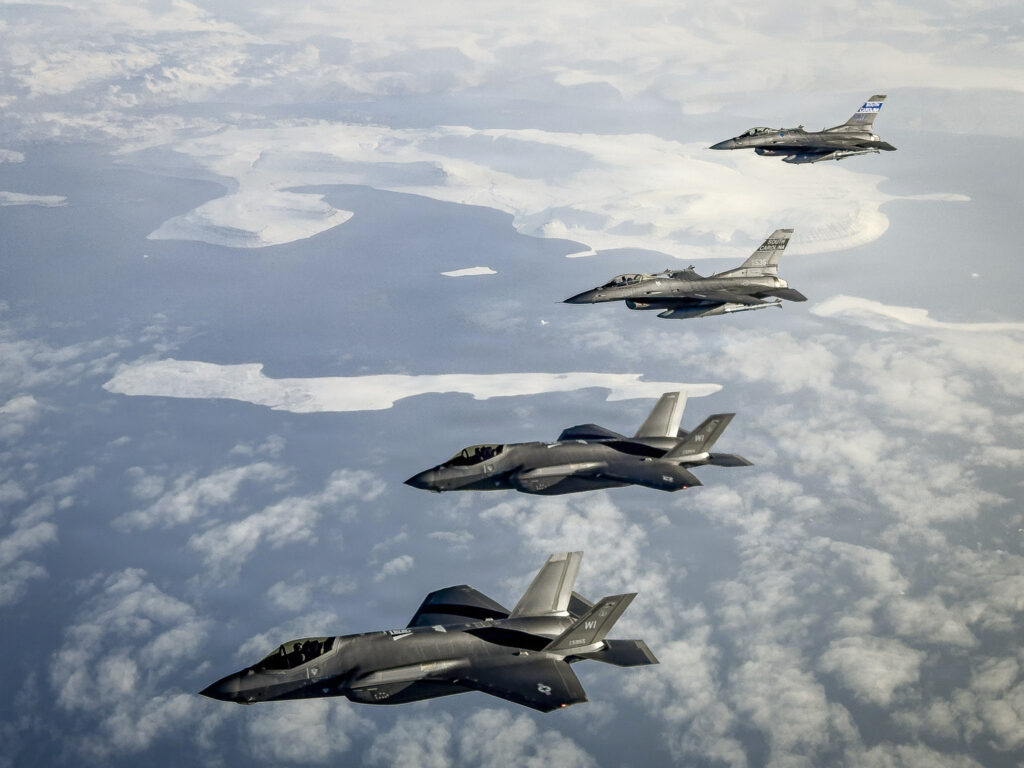
- North American Aerospace Defense Command operates in Arctic: U.S. Air Force