The House Armed Services Committee released the Chairman’s Mark of the FY27 defense authorization bill Tuesday. The proposal, which the full HASC committee will review and adjust on Thursday, June 4, would authorize $1.142 trillion in discretionary national security spending, exactly matching the administration’s request. The Pentagon’s portion of the national security budget totals $1.071 trillion. Similarly, the committee left the defense topline largely in place in its markup of last year’s budget. Notably, the committee does not address $350 billion in mandatory funding requested by the administration to support FY27 initiatives through reconciliation. That block of funding will be addressed through a separate legislative process.
Despite the lack of a topline adjustment, the Chairman’s Mark proposes some modest changes to programs within the budget. For military acquisition, the bill recommends adding $1.2 billion for procurement and $567.7 million for Research, Development, Test, and Evaluation (RDT&E).
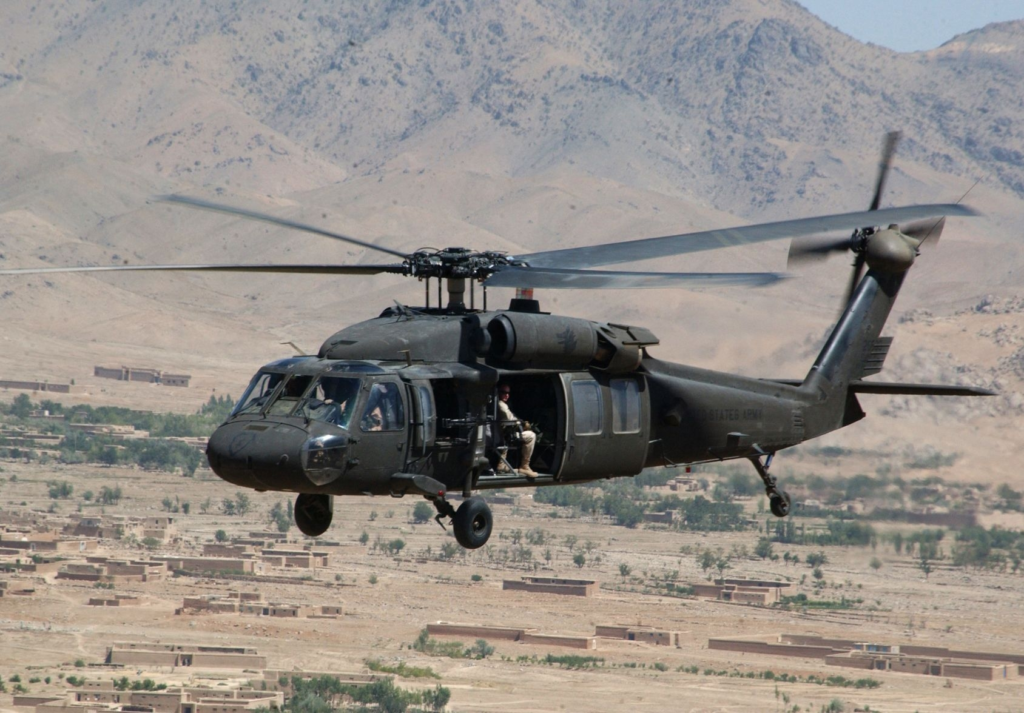
For procurement programs, the biggest increase is $573.3 million for Defense-Wide agencies, followed by an extra $440.6 million for the Air Force and $202.6 million for the Navy. The Army would receive a net increase of only $17.8 million. The bill adds a net $887.5 million for aircraft across the services, supporting an additional six UH-60s, seven CH-47s, two C-130Js, and four MH-139s. The Chairman’s Mark also recommends adding $207 million for Navy shipbuilding and $186 million for Army vehicles. Meanwhile, the legislation proposes a $134 million reduction across the Pentagon’s various missile accounts.
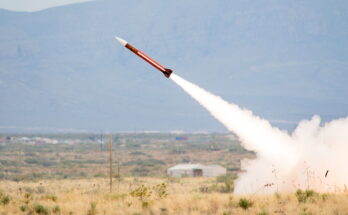
The RDT&E increase includes $323.5 million for the Army and $191.9 million for the Navy. However, the legislation recommends cutting $329.4 million for the Air Force and $211.4 million for the Space Force. Notable program increases include an extra $175 million for the Nuclear Sea-Launched Cruise Missile (SLCM-N) and $127.2 million for Future Long Range Assault Aircraft (FLRAA) development. Several programs are subject to cuts, including a $705.9 million reduction for Automated Satellite Command and Control (Sat C2) – a Space Force effort to improve command and control capabilities that received $1.5 billion in the FY27 request – $137.4 million for Collaborative Combat Aircraft (CCA) for the Air Force, $51.4 million for Next Generation Adaptive Propulsion, and $52.5 million for the Family of Affordable Mass Missiles (FAMM).
The reconciliation gap has the most significant implications for the administration’s broader modernization agenda. The $350 billion left unaddressed includes $155.5 billion for procurement and $124.9 billion for RDT&E. Most of the administration’s industrial base investment plans are funded through reconciliation, as is $53.6 billion in research funding sought for the Defense Autonomous Warfare Group, though the Chairman’s Mark does support the $1 billion in base funding requested for DAWG. The Pentagon’s expanded munitions investment plans are heavily reliant on reconciliation as well, with requested amounts of $24.5 billion for the Army, $10.9 billion for the Navy, and $4.6 billion for the Air Force. Several other programs also used reconciliation to bolster procurement rates in FY27, including the F-35 (which also carries $2.4 billion in reconciliation research funding), the Marine Corps’ Medium Landing Ship, and the KC-130J tanker. Nearly the entire Golden Dome research budget relies on reconciliation as well, reflecting $17.1 billion.
Passage of a new reconciliation bill isn’t guaranteed, and it’s possible that congressional appropriators will address some of these requirements in their markups of the discretionary budget depending on how that process moves forward. Reconciliation aside, the Chairman’s Mark supports the sizeable $1.1 trillion base budget, and next week’s full HASC review will establish the committee’s stance on the investment priorities contained therein.

Shaun's deep-rooted interest in military equipment continues in his role as a senior defense analyst with a focus on the United States. He played an integral role in the development of Forecast International's U.S. Defense Budget Forecast, an interactive online product that tracks Pentagon acquisition programs throughout the congressional budget process. As editor of International Military Markets – North America, Shaun has cultivated a deep understanding of the vast defense markets in the United States and Canada. He is a regular contributor to Forecast International's Defense & Security Monitor blog and has co-authored white papers on global defense spending and various military programs.