Hot on the heels of Ukraine’s negotiations for the Saab Gripen fighter jet, Kyiv has now inked a letter of intent with France that could see the eastern European country acquire dozens of Rafale fighter jets from Dassault. While acquisition of either platform will take years to complete, the potential sales mark the start of a major overhaul for the Ukrainian Air Force.
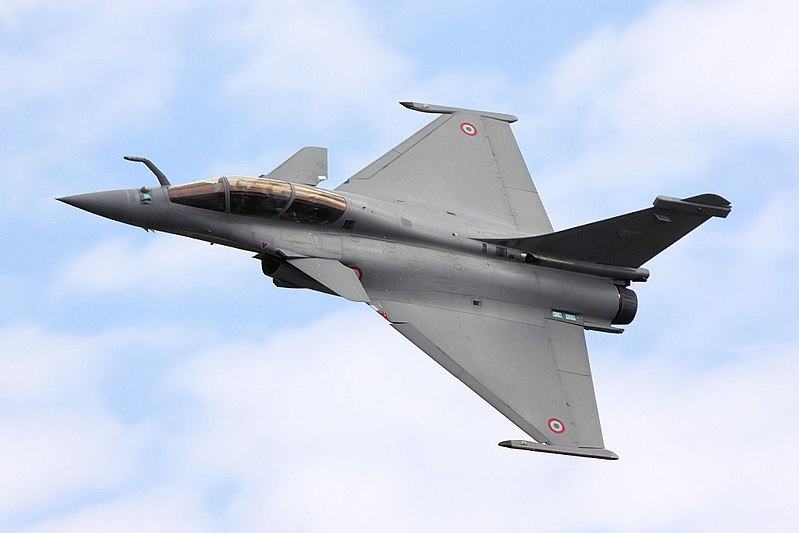
On November 17, Kyiv and Paris announced a letter of intent (LOI) regarding a possible future sale of 100 Rafale combat aircraft, which would be procured alongside new SAMP/T air-defense systems and drones. The equipment would be new, rather than drawn from French military inventories. “It will be the greatest air-defense, one of the greatest in the world,” Ukrainian President Volodymyr Zelensky told reporters after the LOI signing.
The dialogue with France follows last month’s announcement of a similar deal with Sweden that could see Ukraine purchase anywhere from 100 to 150 JAS-39 Gripen jets. Most if not all of these would be new-build, with the first units ready for delivery within three years, though there is a possibility that some could arrive already by next year if Sweden transfers aircraft from its Air Force.
From President Zelensky’s perspective, there is room for both platforms in Ukraine’s air fleet. After announcing the Gripen LOI in October, he stated that Kyiv is pursuing parallel negotiating tracks with Paris and Washington over the Rafale and F-16, respectively. He added that he believes Ukraine needs around 250 new combat aircraft to build out its Air Force, which currently comprises legacy Soviet-era aircraft as well as second-hand F-16 and Mirage 2000 jets delivered over the past two years from European partners.
New fighter jets will provide Ukraine more options for air-defense against incoming Russian missiles and drones. Moscow has sought to overwhelm Ukraine’s ground-based air-defense systems with regular missile and drone salvoes, straining Ukraine’s ability to protect its cities and critical infrastructure. Ukraine also wants modern fighter jets that can carry long-range strike weapons to improve its long-term deterrence against Moscow.
There are also potential benefits to Ukraine’s defense industry from the proposed fighter jet deals. Days after the Gripen LOI was announced, Saab CEO Micael Johansson told the Financial Times in an interview that the company could open up a Gripen final assembly plant in Ukraine, adding that Ukraine could also be involved in parts production for the jet.
The biggest obstacle for Ukraine to overcome, however, is financial. Pre-war plans for the country’s combat air fleet, published in 2020, were much more modest than current targets, calling for Ukraine to field up to 108 new fighter jets through 2035. Even at that lower target, the cost of the procurement plan was expected to be a high barrier, and no concrete progress on an acquisition was made before the Russian invasion in 2022.
While its budget has been augmented by Western aid, Ukraine would still have trouble budgeting a full-scale overhaul of its Air Force. Modern fighter jets come with high sticker prices – as do the armaments they carry – and the investment becomes even more expensive once long-term repair and modernization costs are factored in.
A hypothetical contract for 100 Rafales could cost $20-25 billion (using back-of-the-envelope math from other recent contracts) and a Gripen acquisition could be expected to have a similar value, meaning Kyiv is looking at a $40-50 billion program to overhaul its Air Force’s combat air fleet. This would be a mammoth bill for any country of Ukraine’s size, but more so for Kyiv considering its other pressing procurement needs, such as artillery, drones, and missile defense systems.
Ukraine’s fighter jet acquisition plan is thus going to be heavily dependent on what financial help it can receive from its European partners for the purchase. Both Paris and Stockholm have offered some assistance, but will not foot the entire bill. They are instead lobbying for the E.U. to agree to utilize billions of euros in frozen Russian assets to support Ukraine’s defense acquisitions, including its fighter jet plans. It would make for an ironic twist – a modern Ukrainian Air Force, paid for by Russia – but European leaders are far from agreement at present on whether to commandeer the frozen funds.

Military markets analyst, covering Eurasia, Middle East, and Africa.
- Derek Bisaccio
- Derek Bisaccio
- Derek Bisaccio
- Derek Bisaccio
- Derek Bisaccio
- Derek Bisaccio
- Derek Bisaccio
- Derek Bisaccio
- Derek Bisaccio
- Derek Bisaccio
- Derek Bisaccio
- Derek Bisaccio
- Derek Bisaccio
- Derek Bisaccio
- Derek Bisaccio
- Derek Bisaccio
- Derek Bisaccio
- Derek Bisaccio
- Derek Bisaccio
- Derek Bisaccio
- Derek Bisaccio
- Derek Bisaccio
- Derek Bisaccio
- Derek Bisaccio
- Derek Bisaccio
- Derek Bisaccio
- Derek Bisaccio
- Derek Bisaccio
- Derek Bisaccio
- Derek Bisaccio
- Derek Bisaccio
- Derek Bisaccio
- Derek Bisaccio
- Derek Bisaccio
- Derek Bisaccio
- Derek Bisaccio
- Derek Bisaccio
- Derek Bisaccio
- Derek Bisaccio
- Derek Bisaccio
- Derek Bisaccio
- Derek Bisaccio
- Derek Bisaccio
- Derek Bisaccio
- Derek Bisaccio
- Derek Bisaccio
- Derek Bisaccio
- Derek Bisaccio
- Derek Bisaccio
- Derek Bisaccio
- Derek Bisaccio
- Derek Bisaccio
- Derek Bisaccio
- Derek Bisaccio
- Derek Bisaccio
- Derek Bisaccio
- Derek Bisaccio
- Derek Bisaccio
- Derek Bisaccio
- Derek Bisaccio
- Derek Bisaccio
- Derek Bisaccio
- Derek Bisaccio
- Derek Bisaccio
- Derek Bisaccio
- Derek Bisaccio
- Derek Bisaccio
- Derek Bisaccio
- Derek Bisaccio
- Derek Bisaccio
- Derek Bisaccio
- Derek Bisaccio
- Derek Bisaccio
- Derek Bisaccio
- Derek Bisaccio
- Derek Bisaccio
- Derek Bisaccio
- Derek Bisaccio
- Derek Bisaccio
- Derek Bisaccio
- Derek Bisaccio
- Derek Bisaccio
- Derek Bisaccio
- Derek Bisaccio
- Derek Bisaccio
- Derek Bisaccio
- Derek Bisaccio
- Derek Bisaccio
- Derek Bisaccio
- Derek Bisaccio
- Derek Bisaccio
- Derek Bisaccio
- Derek Bisaccio
- Derek Bisaccio
- Derek Bisaccio
- Derek Bisaccio
- Derek Bisaccio
- Derek Bisaccio
- Derek Bisaccio
- Derek Bisaccio
- Derek Bisaccio
- Derek Bisaccio
- Derek Bisaccio
- Derek Bisaccio
- Derek Bisaccio
- Derek Bisaccio
- Derek Bisaccio
- Derek Bisaccio
- Derek Bisaccio
- Derek Bisaccio
- Derek Bisaccio
- Derek Bisaccio
- Derek Bisaccio
- Derek Bisaccio
- Derek Bisaccio
- Derek Bisaccio
- Derek Bisaccio
- Derek Bisaccio
- Derek Bisaccio
- Derek Bisaccio
- Derek Bisaccio
- Derek Bisaccio
- Derek Bisaccio
- Derek Bisaccio
- Derek Bisaccio
- Derek Bisaccio
- Derek Bisaccio
- Derek Bisaccio
- Derek Bisaccio
- Derek Bisaccio
- Derek Bisaccio
- Derek Bisaccio
- Derek Bisaccio
- Derek Bisaccio
- Derek Bisaccio
- Derek Bisaccio
- Derek Bisaccio
- Derek Bisaccio
- Derek Bisaccio
- Derek Bisaccio
- Derek Bisaccio
- Derek Bisaccio
- Derek Bisaccio
- Derek Bisaccio
- Derek Bisaccio
- Derek Bisaccio
- Derek Bisaccio
- Derek Bisaccio
- Derek Bisaccio
- Derek Bisaccio
- Derek Bisaccio
- Derek Bisaccio
- Derek Bisaccio
- Derek Bisaccio
- Derek Bisaccio
- Derek Bisaccio
- Derek Bisaccio
- Derek Bisaccio
- Derek Bisaccio
- Derek Bisaccio
- Derek Bisaccio
- Derek Bisaccio
- Derek Bisaccio
- Derek Bisaccio
- Derek Bisaccio
- Derek Bisaccio
- Derek Bisaccio
- Derek Bisaccio
- Derek Bisaccio
- Derek Bisaccio
- Derek Bisaccio
- Derek Bisaccio
- Derek Bisaccio
- Derek Bisaccio
- Derek Bisaccio
- Derek Bisaccio
- Derek Bisaccio
- Derek Bisaccio
- Derek Bisaccio
- Derek Bisaccio
- Derek Bisaccio
- Derek Bisaccio
- Derek Bisaccio
- Derek Bisaccio
- Derek Bisaccio
- Derek Bisaccio
- Derek Bisaccio
- Derek Bisaccio
- Derek Bisaccio
- Derek Bisaccio
- Derek Bisaccio
- Derek Bisaccio
- Derek Bisaccio
- Derek Bisaccio
- Derek Bisaccio
- Derek Bisaccio
- Derek Bisaccio
- Derek Bisaccio
- Derek Bisaccio
- Derek Bisaccio
- Derek Bisaccio
- Derek Bisaccio
- Derek Bisaccio
- Derek Bisaccio
- Derek Bisaccio
- Derek Bisaccio
- Derek Bisaccio
- Derek Bisaccio
- Derek Bisaccio
- Derek Bisaccio
- Derek Bisaccio
- Derek Bisaccio
- Derek Bisaccio
- Derek Bisaccio
- Derek Bisaccio
- Derek Bisaccio
- Derek Bisaccio
- Derek Bisaccio
- Derek Bisaccio
- Derek Bisaccio
- Derek Bisaccio
- Derek Bisaccio
- Derek Bisaccio
- Derek Bisaccio
- Derek Bisaccio
- Derek Bisaccio
- Derek Bisaccio
- Derek Bisaccio
- Derek Bisaccio
- Derek Bisaccio
- Derek Bisaccio
- Derek Bisaccio
- Derek Bisaccio
- Derek Bisaccio
- Derek Bisaccio
- Derek Bisaccio
- Derek Bisaccio
- Derek Bisaccio
- Derek Bisaccio
- Derek Bisaccio
- Derek Bisaccio
- Derek Bisaccio
- Derek Bisaccio
- Derek Bisaccio
- Derek Bisaccio
- Derek Bisaccio
- Derek Bisaccio
- Derek Bisaccio
- Derek Bisaccio
- Derek Bisaccio
- Derek Bisaccio
- Derek Bisaccio
- Derek Bisaccio
- Derek Bisaccio
- Derek Bisaccio
- Derek Bisaccio
- Derek Bisaccio
- Derek Bisaccio
- Derek Bisaccio
- Derek Bisaccio
- Derek Bisaccio
- Derek Bisaccio
- Derek Bisaccio
- Derek Bisaccio
- Derek Bisaccio
- Derek Bisaccio
- Derek Bisaccio
- Derek Bisaccio
- Derek Bisaccio
- Derek Bisaccio
- Derek Bisaccio
- Derek Bisaccio
- Derek Bisaccio
- Derek Bisaccio
- Derek Bisaccio
- Derek Bisaccio
- Derek Bisaccio
- Derek Bisaccio
- Derek Bisaccio
- Derek Bisaccio
- Derek Bisaccio
- Derek Bisaccio
- Derek Bisaccio
- Derek Bisaccio
- Derek Bisaccio
- Derek Bisaccio
- Derek Bisaccio
- Derek Bisaccio
- Derek Bisaccio
- Derek Bisaccio
- Derek Bisaccio
- Derek Bisaccio
- Derek Bisaccio
- Derek Bisaccio
- Derek Bisaccio
- Derek Bisaccio
- Derek Bisaccio
- Derek Bisaccio
- Derek Bisaccio
- Derek Bisaccio
- Derek Bisaccio
- Derek Bisaccio
- Derek Bisaccio
- Derek Bisaccio
- Derek Bisaccio
- Derek Bisaccio
- Derek Bisaccio
- Derek Bisaccio
- Derek Bisaccio
- Derek Bisaccio
- Derek Bisaccio
- Derek Bisaccio
- Derek Bisaccio
- Derek Bisaccio
- Derek Bisaccio
- Derek Bisaccio
- Derek Bisaccio
- Derek Bisaccio
- Derek Bisaccio
- Derek Bisaccio
- Derek Bisaccio
- Derek Bisaccio
- Derek Bisaccio
- Derek Bisaccio
- Derek Bisaccio
- Derek Bisaccio
- Derek Bisaccio
- Derek Bisaccio
- Derek Bisaccio
- Derek Bisaccio
- Derek Bisaccio
- Derek Bisaccio
- Derek Bisaccio
- Derek Bisaccio
- Derek Bisaccio
- Derek Bisaccio
- Derek Bisaccio
- Derek Bisaccio
- Derek Bisaccio
- Derek Bisaccio
- Derek Bisaccio
- Derek Bisaccio
- Derek Bisaccio
- Derek Bisaccio
- Derek Bisaccio
- Derek Bisaccio
- Derek Bisaccio
- Derek Bisaccio
- Derek Bisaccio
- Derek Bisaccio
- Derek Bisaccio
- Derek Bisaccio
- Derek Bisaccio
- Derek Bisaccio
- Derek Bisaccio
- Derek Bisaccio
- Derek Bisaccio
- Derek Bisaccio
- Derek Bisaccio
- Derek Bisaccio
- Derek Bisaccio
- Derek Bisaccio
- Derek Bisaccio
- Derek Bisaccio
- Derek Bisaccio
- Derek Bisaccio
- Derek Bisaccio
- Derek Bisaccio
- Derek Bisaccio
- Derek Bisaccio
- Derek Bisaccio
- Derek Bisaccio
- Derek Bisaccio
- Derek Bisaccio
- Derek Bisaccio
- Derek Bisaccio
- Derek Bisaccio
- Derek Bisaccio
- Derek Bisaccio
- Derek Bisaccio
- Derek Bisaccio
- Derek Bisaccio
- Derek Bisaccio
- Derek Bisaccio
- Derek Bisaccio
- Derek Bisaccio
- Derek Bisaccio
- Derek Bisaccio
- Derek Bisaccio
- Derek Bisaccio
- Derek Bisaccio
- Derek Bisaccio
- Derek Bisaccio
- Derek Bisaccio
- Derek Bisaccio
- Derek Bisaccio
- Derek Bisaccio
- Derek Bisaccio
- Derek Bisaccio
- Derek Bisaccio
- Derek Bisaccio
- Derek Bisaccio
- Derek Bisaccio
- Derek Bisaccio
- Derek Bisaccio
- Derek Bisaccio
- Derek Bisaccio
- Derek Bisaccio
- Derek Bisaccio
- Derek Bisaccio
- Derek Bisaccio
- Derek Bisaccio
- Derek Bisaccio
- Derek Bisaccio
- Derek Bisaccio
- Derek Bisaccio
- Derek Bisaccio
- Derek Bisaccio
- Derek Bisaccio
- Derek Bisaccio
- Derek Bisaccio
- Derek Bisaccio
- Derek Bisaccio
- Derek Bisaccio
- Derek Bisaccio
- Derek Bisaccio
- Derek Bisaccio
- Derek Bisaccio
- Derek Bisaccio
- Derek Bisaccio
- Derek Bisaccio
- Derek Bisaccio
- Derek Bisaccio
- Derek Bisaccio
- Derek Bisaccio
- Derek Bisaccio
- Derek Bisaccio
- Derek Bisaccio
- Derek Bisaccio
- Derek Bisaccio
- Derek Bisaccio