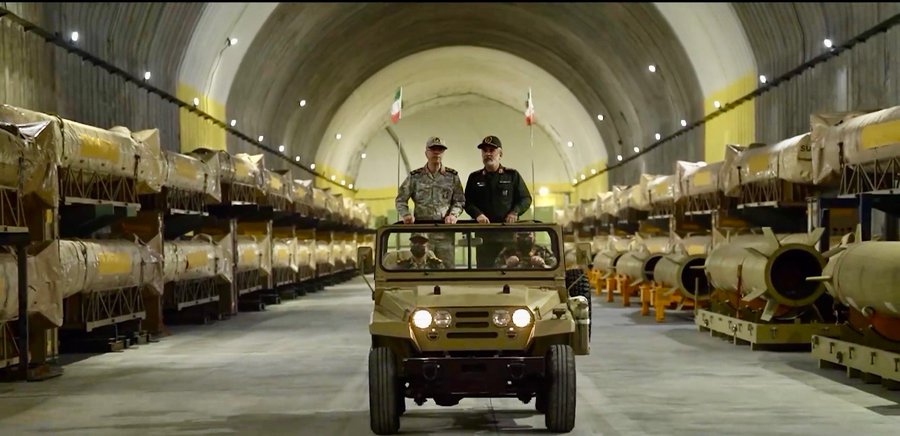
Iranian security strategy largely rests on the country’s short- and medium-range missile arsenal, developed as a national means to deter Tehran’s rivals and, in the event of conflict, impose unacceptable costs. Thus Iran fired multiple salvoes at Israel in 2024, as part of its ‘True Promise’ I and II operations, and launched more this past June during the ‘Twelve-Day War’. Iran also hit the Gulf during these missions, and with renewed hostilities breaking out, appears to be more heavily targeting its littoral neighbors.
Within hours of the U.S. and Israeli Air Forces performing strikes on Iran on February 28, Iran retaliated with Operation ‘True Promise’ IV, firing missiles and one-way attack (OWA) drones at Israel, U.S. regional forces, and the Gulf. By Monday, Iran had fired at least 165 ballistic missiles, two cruise missiles, and 541 OWA drones at the UAE. Another 97 ballistic missiles and 283 OWA drones targeted Kuwait, the country’s Ministry of Defense confirmed. Qatar meanwhile reported that 65 ballistic missiles and 12 drones were detected and Bahrain said it intercepted 61 missiles, along with 34 drones. A pair of drones hit Oman’s Duqm port, despite Muscat’s efforts to serve as mediator between Washington and Tehran ahead of the war.
The Iranian response has taken place even amid severe command and control problems – and the loss of over 100 ballistic missile launchers last year – demonstrating some degree of decentralized decision-making in its missile units.
The majority of Iran’s missiles and drones do not make it to their targets, felled en route by air-defenses, but the sheer volume of projectiles ensures that some will get through. Several American service personnel were killed in an Iranian drone attack in Kuwait and drones struck the U.S. Navy base in Bahrain. Saudi Arabia said on Monday that its Ras Tanura refinery suffered a fire as a result of incoming Iranian drones; Qatar halted liquified natural gas production after strikes hit its Mesaieed and Ras Laffan facilities. Footage from local residents and tourists throughout the Gulf shows damage to airports and luxury sites, such as the UAE’s iconic Burj al-Arab hotel, following Iranian strikes.
While engaging Iranian missiles and drones, Kuwait’s air-defenses mistakenly shot down three American F-15s.
The initial Gulf reaction to Iran’s attacks has been defiance. “The price must be paid for these blatant attacks against the people of Qatar and their security,” Qatar Foreign Ministry spokesman Majed al-Ansari told CNN on March 2. On the same day, the Qatari Ministry of Defense announced it had shot down a pair of Iranian Su-24s.
Riyadh similarly issued a statement noting “it will take all necessary measures” to defend itself, “including with the option of responding to the aggression.”
This early in the conflict, the situation is far too fluid to make a firm prediction on how it will play out. Iran’s calculation, however, is that the Gulf will eventually lose its nerve under economic pressure and lobby Washington behind the scenes to bring the conflict to a close. Iran likely possessed some 2,500 ballistic missiles at the start of this year, according to Israeli intelligence assessments, and many more OWA drones, giving it depth to continue strikes even as it takes a beating from American and Israeli action. Iran can credibly threaten oil infrastructure and shipping through the Strait of Hormuz that local economies rely on, and the attacks shatter the image of stability that drives investment and tourism to the Gulf.
Iran is gambling that, faced with these costs, the Gulf countries will lobby Washington behind the scenes to bring the conflict to a close, rather than join in the war themselves.
For its strategy to succeed, Iran will have to outlast what is expected to be a weeks’ long American operation. Iran has already suffered the loss of key military and political leaders, including Supreme Leader Ali Khamenei, degrading its combat effectiveness and raising the very real prospect of regime change or military coup. Each time its missile units conduct strikes, they run the risk of detection and elimination.
“We’re going to destroy their missiles and raze their missile industry to the ground,” President Trump vowed in a statement at the outset of the war. He further urged Iranians to return to the streets and overthrow the regime. The course of the conflict will depend on whether Iran can sustain its missile barrages amid mounting military losses and growing domestic instability.

Military markets analyst, covering Eurasia, Middle East, and Africa.
- Derek Bisaccio
- Derek Bisaccio
- Derek Bisaccio
- Derek Bisaccio
- Derek Bisaccio
- Derek Bisaccio
- Derek Bisaccio
- Derek Bisaccio
- Derek Bisaccio
- Derek Bisaccio
- Derek Bisaccio
- Derek Bisaccio
- Derek Bisaccio
- Derek Bisaccio
- Derek Bisaccio
- Derek Bisaccio
- Derek Bisaccio
- Derek Bisaccio
- Derek Bisaccio
- Derek Bisaccio
- Derek Bisaccio
- Derek Bisaccio
- Derek Bisaccio
- Derek Bisaccio
- Derek Bisaccio
- Derek Bisaccio
- Derek Bisaccio
- Derek Bisaccio
- Derek Bisaccio
- Derek Bisaccio
- Derek Bisaccio
- Derek Bisaccio
- Derek Bisaccio
- Derek Bisaccio
- Derek Bisaccio
- Derek Bisaccio
- Derek Bisaccio
- Derek Bisaccio
- Derek Bisaccio
- Derek Bisaccio
- Derek Bisaccio
- Derek Bisaccio
- Derek Bisaccio
- Derek Bisaccio
- Derek Bisaccio
- Derek Bisaccio
- Derek Bisaccio
- Derek Bisaccio
- Derek Bisaccio
- Derek Bisaccio
- Derek Bisaccio
- Derek Bisaccio
- Derek Bisaccio
- Derek Bisaccio
- Derek Bisaccio
- Derek Bisaccio
- Derek Bisaccio
- Derek Bisaccio
- Derek Bisaccio
- Derek Bisaccio
- Derek Bisaccio
- Derek Bisaccio
- Derek Bisaccio
- Derek Bisaccio
- Derek Bisaccio
- Derek Bisaccio
- Derek Bisaccio
- Derek Bisaccio
- Derek Bisaccio
- Derek Bisaccio
- Derek Bisaccio
- Derek Bisaccio
- Derek Bisaccio
- Derek Bisaccio
- Derek Bisaccio
- Derek Bisaccio
- Derek Bisaccio
- Derek Bisaccio
- Derek Bisaccio
- Derek Bisaccio
- Derek Bisaccio
- Derek Bisaccio
- Derek Bisaccio
- Derek Bisaccio
- Derek Bisaccio
- Derek Bisaccio
- Derek Bisaccio
- Derek Bisaccio
- Derek Bisaccio
- Derek Bisaccio
- Derek Bisaccio
- Derek Bisaccio
- Derek Bisaccio
- Derek Bisaccio
- Derek Bisaccio
- Derek Bisaccio
- Derek Bisaccio
- Derek Bisaccio
- Derek Bisaccio
- Derek Bisaccio
- Derek Bisaccio
- Derek Bisaccio
- Derek Bisaccio
- Derek Bisaccio
- Derek Bisaccio
- Derek Bisaccio
- Derek Bisaccio
- Derek Bisaccio
- Derek Bisaccio
- Derek Bisaccio
- Derek Bisaccio
- Derek Bisaccio
- Derek Bisaccio
- Derek Bisaccio
- Derek Bisaccio
- Derek Bisaccio
- Derek Bisaccio
- Derek Bisaccio
- Derek Bisaccio
- Derek Bisaccio
- Derek Bisaccio
- Derek Bisaccio
- Derek Bisaccio
- Derek Bisaccio
- Derek Bisaccio
- Derek Bisaccio
- Derek Bisaccio
- Derek Bisaccio
- Derek Bisaccio
- Derek Bisaccio
- Derek Bisaccio
- Derek Bisaccio
- Derek Bisaccio
- Derek Bisaccio
- Derek Bisaccio
- Derek Bisaccio
- Derek Bisaccio
- Derek Bisaccio
- Derek Bisaccio
- Derek Bisaccio
- Derek Bisaccio
- Derek Bisaccio
- Derek Bisaccio
- Derek Bisaccio
- Derek Bisaccio
- Derek Bisaccio
- Derek Bisaccio
- Derek Bisaccio
- Derek Bisaccio
- Derek Bisaccio
- Derek Bisaccio
- Derek Bisaccio
- Derek Bisaccio
- Derek Bisaccio
- Derek Bisaccio
- Derek Bisaccio
- Derek Bisaccio
- Derek Bisaccio
- Derek Bisaccio
- Derek Bisaccio
- Derek Bisaccio
- Derek Bisaccio
- Derek Bisaccio
- Derek Bisaccio
- Derek Bisaccio
- Derek Bisaccio
- Derek Bisaccio
- Derek Bisaccio
- Derek Bisaccio
- Derek Bisaccio
- Derek Bisaccio
- Derek Bisaccio
- Derek Bisaccio
- Derek Bisaccio
- Derek Bisaccio
- Derek Bisaccio
- Derek Bisaccio
- Derek Bisaccio
- Derek Bisaccio
- Derek Bisaccio
- Derek Bisaccio
- Derek Bisaccio
- Derek Bisaccio
- Derek Bisaccio
- Derek Bisaccio
- Derek Bisaccio
- Derek Bisaccio
- Derek Bisaccio
- Derek Bisaccio
- Derek Bisaccio
- Derek Bisaccio
- Derek Bisaccio
- Derek Bisaccio
- Derek Bisaccio
- Derek Bisaccio
- Derek Bisaccio
- Derek Bisaccio
- Derek Bisaccio
- Derek Bisaccio
- Derek Bisaccio
- Derek Bisaccio
- Derek Bisaccio
- Derek Bisaccio
- Derek Bisaccio
- Derek Bisaccio
- Derek Bisaccio
- Derek Bisaccio
- Derek Bisaccio
- Derek Bisaccio
- Derek Bisaccio
- Derek Bisaccio
- Derek Bisaccio
- Derek Bisaccio
- Derek Bisaccio
- Derek Bisaccio
- Derek Bisaccio
- Derek Bisaccio
- Derek Bisaccio
- Derek Bisaccio
- Derek Bisaccio
- Derek Bisaccio
- Derek Bisaccio
- Derek Bisaccio
- Derek Bisaccio
- Derek Bisaccio
- Derek Bisaccio
- Derek Bisaccio
- Derek Bisaccio
- Derek Bisaccio
- Derek Bisaccio
- Derek Bisaccio
- Derek Bisaccio
- Derek Bisaccio
- Derek Bisaccio
- Derek Bisaccio
- Derek Bisaccio
- Derek Bisaccio
- Derek Bisaccio
- Derek Bisaccio
- Derek Bisaccio
- Derek Bisaccio
- Derek Bisaccio
- Derek Bisaccio
- Derek Bisaccio
- Derek Bisaccio
- Derek Bisaccio
- Derek Bisaccio
- Derek Bisaccio
- Derek Bisaccio
- Derek Bisaccio
- Derek Bisaccio
- Derek Bisaccio
- Derek Bisaccio
- Derek Bisaccio
- Derek Bisaccio
- Derek Bisaccio
- Derek Bisaccio
- Derek Bisaccio
- Derek Bisaccio
- Derek Bisaccio
- Derek Bisaccio
- Derek Bisaccio
- Derek Bisaccio
- Derek Bisaccio
- Derek Bisaccio
- Derek Bisaccio
- Derek Bisaccio
- Derek Bisaccio
- Derek Bisaccio
- Derek Bisaccio
- Derek Bisaccio
- Derek Bisaccio
- Derek Bisaccio
- Derek Bisaccio
- Derek Bisaccio
- Derek Bisaccio
- Derek Bisaccio
- Derek Bisaccio
- Derek Bisaccio
- Derek Bisaccio
- Derek Bisaccio
- Derek Bisaccio
- Derek Bisaccio
- Derek Bisaccio
- Derek Bisaccio
- Derek Bisaccio
- Derek Bisaccio
- Derek Bisaccio
- Derek Bisaccio
- Derek Bisaccio
- Derek Bisaccio
- Derek Bisaccio
- Derek Bisaccio
- Derek Bisaccio
- Derek Bisaccio
- Derek Bisaccio
- Derek Bisaccio
- Derek Bisaccio
- Derek Bisaccio
- Derek Bisaccio
- Derek Bisaccio
- Derek Bisaccio
- Derek Bisaccio
- Derek Bisaccio
- Derek Bisaccio
- Derek Bisaccio
- Derek Bisaccio
- Derek Bisaccio
- Derek Bisaccio
- Derek Bisaccio
- Derek Bisaccio
- Derek Bisaccio
- Derek Bisaccio
- Derek Bisaccio
- Derek Bisaccio
- Derek Bisaccio
- Derek Bisaccio
- Derek Bisaccio
- Derek Bisaccio
- Derek Bisaccio
- Derek Bisaccio
- Derek Bisaccio
- Derek Bisaccio
- Derek Bisaccio
- Derek Bisaccio
- Derek Bisaccio
- Derek Bisaccio
- Derek Bisaccio
- Derek Bisaccio
- Derek Bisaccio
- Derek Bisaccio
- Derek Bisaccio
- Derek Bisaccio
- Derek Bisaccio
- Derek Bisaccio
- Derek Bisaccio
- Derek Bisaccio
- Derek Bisaccio
- Derek Bisaccio
- Derek Bisaccio
- Derek Bisaccio
- Derek Bisaccio
- Derek Bisaccio
- Derek Bisaccio
- Derek Bisaccio
- Derek Bisaccio
- Derek Bisaccio
- Derek Bisaccio
- Derek Bisaccio
- Derek Bisaccio
- Derek Bisaccio
- Derek Bisaccio
- Derek Bisaccio
- Derek Bisaccio
- Derek Bisaccio
- Derek Bisaccio
- Derek Bisaccio
- Derek Bisaccio
- Derek Bisaccio
- Derek Bisaccio
- Derek Bisaccio
- Derek Bisaccio
- Derek Bisaccio
- Derek Bisaccio
- Derek Bisaccio
- Derek Bisaccio
- Derek Bisaccio
- Derek Bisaccio
- Derek Bisaccio
- Derek Bisaccio
- Derek Bisaccio
- Derek Bisaccio
- Derek Bisaccio
- Derek Bisaccio
- Derek Bisaccio
- Derek Bisaccio
- Derek Bisaccio
- Derek Bisaccio
- Derek Bisaccio
- Derek Bisaccio
- Derek Bisaccio
- Derek Bisaccio
- Derek Bisaccio
- Derek Bisaccio
- Derek Bisaccio
- Derek Bisaccio
- Derek Bisaccio
- Derek Bisaccio
- Derek Bisaccio
- Derek Bisaccio
- Derek Bisaccio
- Derek Bisaccio
- Derek Bisaccio
- Derek Bisaccio
- Derek Bisaccio
- Derek Bisaccio
- Derek Bisaccio
- Derek Bisaccio
- Derek Bisaccio
- Derek Bisaccio
- Derek Bisaccio
- Derek Bisaccio
- Derek Bisaccio
- Derek Bisaccio
- Derek Bisaccio
- Derek Bisaccio
- Derek Bisaccio
- Derek Bisaccio
- Derek Bisaccio
- Derek Bisaccio
- Derek Bisaccio
- Derek Bisaccio
- Derek Bisaccio
- Derek Bisaccio
- Derek Bisaccio
- Derek Bisaccio
- Derek Bisaccio
- Derek Bisaccio
- Derek Bisaccio
- Derek Bisaccio
- Derek Bisaccio
- Derek Bisaccio
- Derek Bisaccio
- Derek Bisaccio
- Derek Bisaccio
- Derek Bisaccio
- Derek Bisaccio
- Derek Bisaccio
- Derek Bisaccio
- Derek Bisaccio
- Derek Bisaccio
- Derek Bisaccio
- Derek Bisaccio
- Derek Bisaccio
- Derek Bisaccio
- Derek Bisaccio
- Derek Bisaccio
- Derek Bisaccio
- Derek Bisaccio
- Derek Bisaccio
- Derek Bisaccio